One of New Zealand's finest observers of the natural world takes us on a journey from Otago to the subantarctic and follows the life and migration of a sea lion.
With the taut and accurate prose of a scientist, and the lyrical sense of an artist, Neville Peat's compelling style lures us into gaining an immense amount of information. In a work that is deeply intimate and wonderfully expansive, Peat takes us well beyond the physical. He delves into the emotional origins of myth, and reveals an impassioned respect and understanding of the close relationship between humans and animals.
\While exploring changing coastal habitat - blending ancient beliefs, local history, legend, and the natural sciences - Peat encounters a number of remarkable individuals along the way; sea dogs, old salts, and a mysterious drifter who follows the winds and tides. Here we gain the naturalist's sense of wonder, and the philosopher's contemplation of the mysterious presence we call nature.
In Coasting, the second title in ‘the Lark’ series, we gain the naturalist's sense of wonder, and the philosopher's contemplation of the mysterious presence we call nature.
'He combines poetic and descriptive skills with a lightness of touch and a profound understanding of how the natural world interweaves. A captivating work.'
Neville Peat (1947-2026) was an award-winning author and photographer of more than 50 books, covering themes of geography, biography, natural history and the environment. Fascinated by wild and remote environments, dynamic landscapes and unique fauna and flora, he explored much of New Zealand and the South Pacific, from the far-flung tropical atolls of Tokelau, to the snow and ice of the Ross Dependency, Antarctica.
In the late 1970s, Peat spent two summers at Scott Base as a journalist and photographer, and subsequently wrote several books on Antarctic themes.
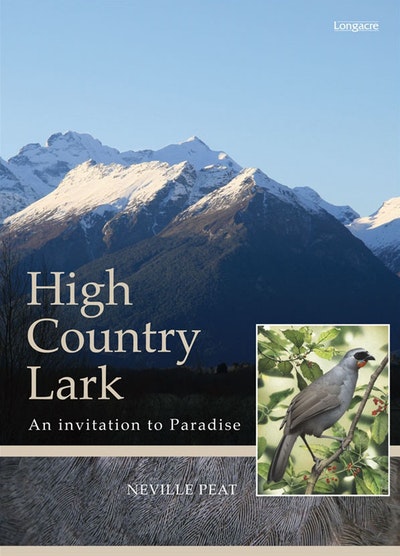
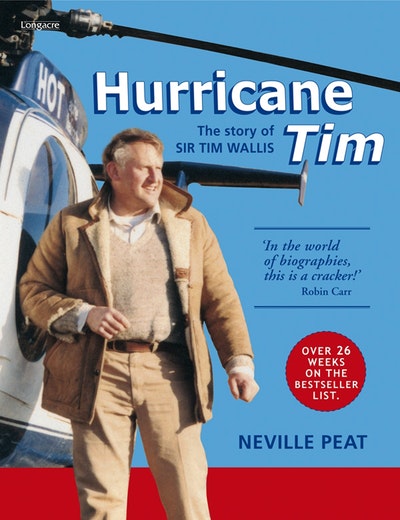
Wild Dunedin: Enjoying the natural history of New Zealand’s wildlife capital (with Brian Patrick) won the 1996 Natural Heritage category of the Montana New Zealand Book Awards, and their Wild Fiordland was shortlisted in 1997. Other books include: Snow Dogs: The huskies of Antarctica; Detours; The Incredible Kiwi; Land Aspiring: The story of Mount Aspiring National Park; Coasting: The sea lion and the lark; Subantarctic New Zealand: A rare heritage; Antarctic Partners: 50 years of New Zealand and United States Cooperation in Antarctica, 1957–2007; High Country Lark; Seabird Genius: The Story of L. E. Richdale, the royal albatross and the yellow-eyed penguin; The Falcon and the Lark: A New Zealand High Country Journal and Shackleton’s Whisky. Peat’s biographies include the bestselling Hurricane Tim: The Story of Sir Tim Wallis.
A fifth-generation descendant of Scottish pioneers in Otago, Peat lived with his family at Broad Bay, Otago Peninsula, near populations of royal albatross, yellow-eyed penguin, New Zealand (Hooker’s) sea lion and New Zealand fur seal, which featured many times in his published works.
He served as a councillor and as deputy chair on the Otago Regional Council, and for a period chaired its Environment and Science Committee. He also undertook commissioned work for Otago Museum, and his comprehensive report on the Subantarctic islands earned World Heritage Area status for five groups of the islands.
In 1994 he was named Dunedin Citizen of the Year, in acknowledgement of his books on the region and his work in establishing the Dunedin Environmental Business Network. In 2007 he was awarded the Creative New Zealand Michael King Writers’ Fellowship to write The Tasman: Biography of an ocean.
In an interview with the Otago Daily Times in 2008, Peat spoke of the importance of books that ‘weave nature into the world of human endeavour and emotion…only through a better understanding of nature can humans, as a species, expect to survive for long.’
In 2018 he was awarded the New Zealand Order of Merit and in 2024 he was awarded the Prime Minister’s Award for Non-fiction, acknowledging his work's significant contribution to our collective understanding of Aotearoa New Zealand’s unique natural environment and its conservation. In his acceptance speech, Peat reflected on his overarching aims: ‘I have tried to convey something of the essence of New Zealand – its nature, its geography, its ability to astound and inspire.'
He died in Dunedin in March 2026, aged 79.