> Skip to content
[]
  • Published: 15 November 2015
  • ISBN: 9781847923868
  • Imprint: Bodley Head
  • Format: Trade Paperback
  • Pages: 272
  • RRP: $47.99

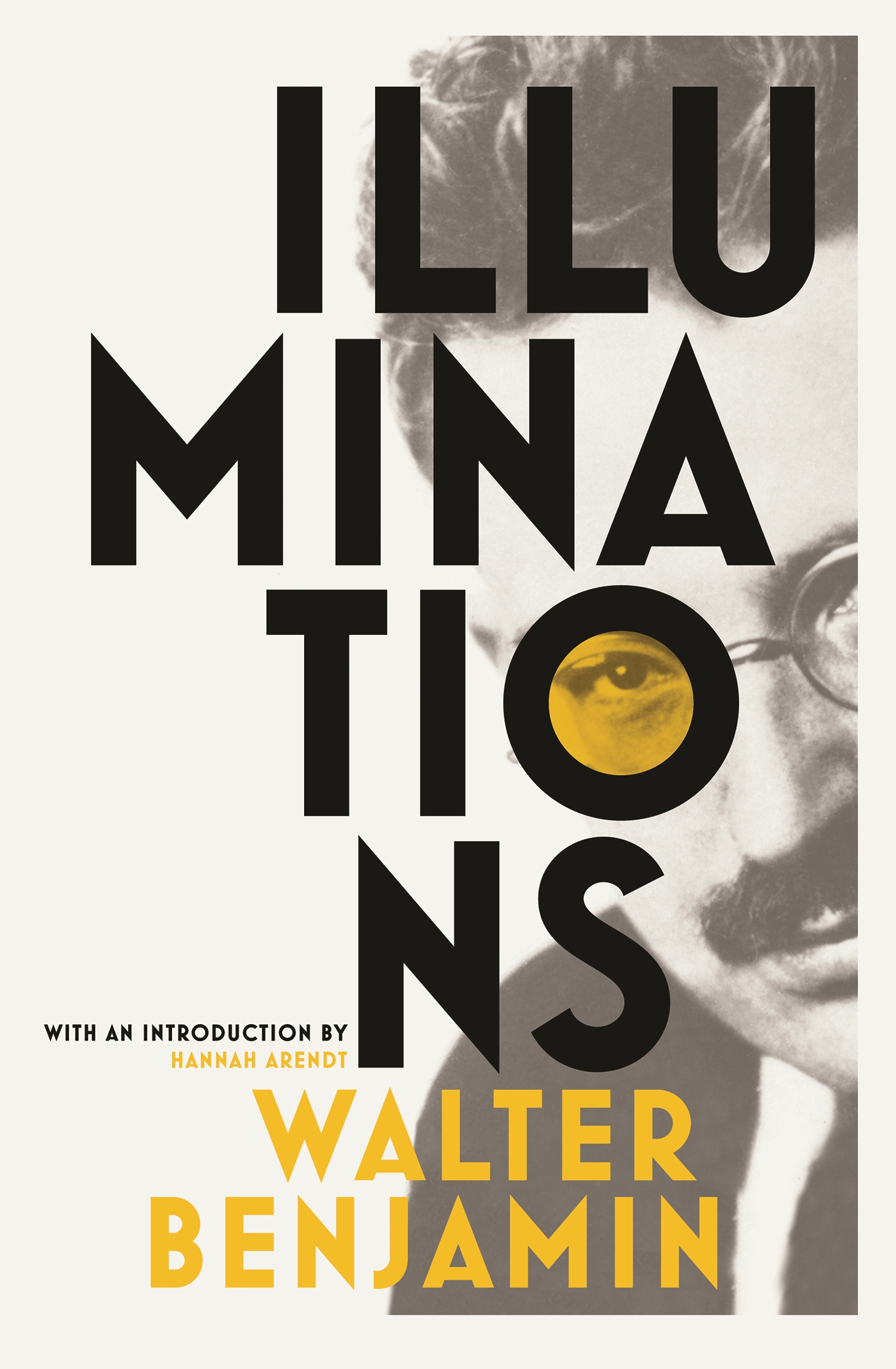
Illuminations


A legendary collection of essays by one of the most influential thinkers of the 20th century

Illuminations contains the most celebrated work of Walter Benjamin, one of the most original and influential thinkers of the 20th Century: 'The Work of Art in the Age of Mechanical Reproduction', ‘The Task of the Translator’ and 'Theses on the Philosophy of History', as well as essays on Kafka, storytelling, Baudelaire, Brecht's epic theatre, Proust and an anatomy of his own obsession, book collecting.

This now legendary volume offers the best possible access to Benjamin’s singular and significant achievement, while Hannah Arendt’s introduction reveals how his life and work are a prism to his times.

  • Published: 15 November 2015
  • ISBN: 9781847923868
  • Imprint: Bodley Head
  • Format: Trade Paperback
  • Pages: 272
  • RRP: $47.99

About the author

Walter Benjamin

Walter Benjamin was born on July 15, 1892 to a German-Jewish family in Berlin. He was educated at the Albert Ludwig University in Freiburg and the Friedrich Wilhelm University in Berlin. An essay on Goethe's Elective Affinities published in 1924 earned him swift recognition but he struggled to find a position to support himself and build on its success. When the Nazis came to power in 1933, Benjamin fled to Paris and became a prominent critic of Hitler's regime. During this period he worked on his immense study of 19th century Parisian life known as The Arcades Project (which was posthumously published in unfinished form).Following the Nazi invasion of France Benjamin attempted to escape to the United States where a visa had been obtained for him.Trying to get through to neutral Portugal, Benjamin was prevented from crossing the Spanish border and committed suicide on September 27 1940.

Also by Walter Benjamin

See all

Praise for Illuminations

From the evidence of this book I would suggest that Benjamin was one of the great European writers of this century

Philip Toynbee, Observer

He explained the modern with an authority that fifty years of unpredictable change have not vitiated

Frank Kermode, New York Review of Books

Like Baudelaire, Benjamin brings the very new into shocking conjunction with the very old … He is in search of a surrealist history and politics, one which clings tenaciously to the fragment, the miniature, the stray citation, but which impacts these fragments one upon the other to politically explosive effect, like the Messiah who will transfigure the world completely by making minor adjustments to it

Terry Eagleton