From Death of a River Guide to Seize the Fire, here’s our guide to the wonderful fiction of the Man Booker Prize winner.
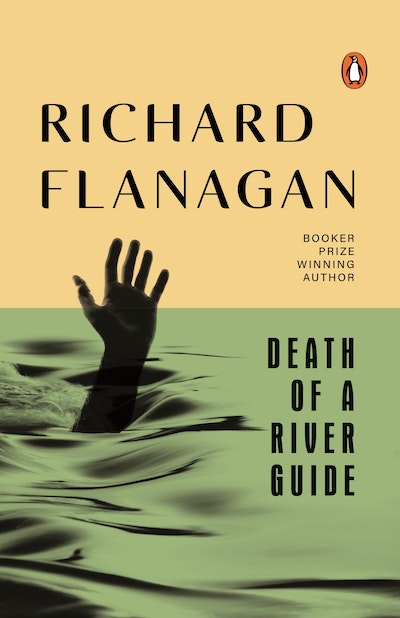
Death of a River Guide
First published: 1994
Richard’s 1994 debut dazzled readers around the world. Now recognised as one of the most powerful and original Australian novels of recent decades, Death of a River Guide has been called ‘Uplifting and immensely rewarding’ by the Australian Book Review and ‘A compelling celebration of river and landscape’ by The Age.
Beneath a waterfall on the Franklin, Aljaz Cosini, river guide, lies drowning. Beset by visions at once horrible and fabulous, he relives not just his own life but that of his family and forebears. In the rainforest waters that rush over him he sees those lives stripped of their surface realities, and finds a world where dreaming reasserts its power over thinking. As the river rises, his visions grow more turbulent, and in the flood of his past Aljaz discovers the soul history of his country.
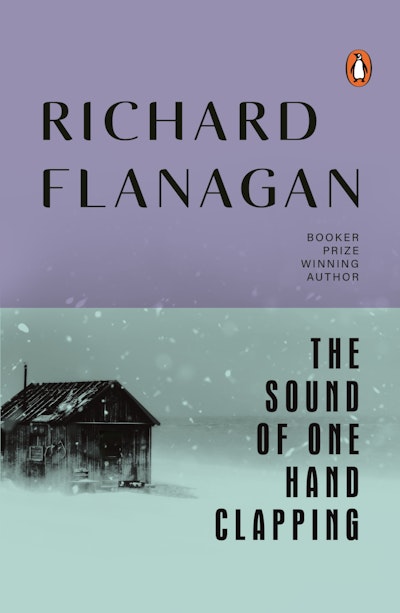
The Sound of One Hand Clapping
First Published: 1997
‘From its wonderfully atmospheric opening to its touching conclusion, this is a heartbreaking story, beautifully told’ – Literary Review (London).
One of the most-loved and biggest-selling literary novels in Australian history, The Sound of One Hand Clapping is about the underbelly of Australia, the barbarism of Europe, and the destiny of those in the country beyond hope who seek to redeem themselves through love.
In the winter of 1954, in a construction camp in the remote Tasmanian highlands, when Sonja Buloh was three years old and her father was drinking too much, Sonja's mother walked into a blizzard never to return. Some thirty-five years later, when Sonja visits Tasmania and her drunkard father, the shadows of the past begin to intrude ever more forcefully into the present – changing for ever his living death and her ordered life.
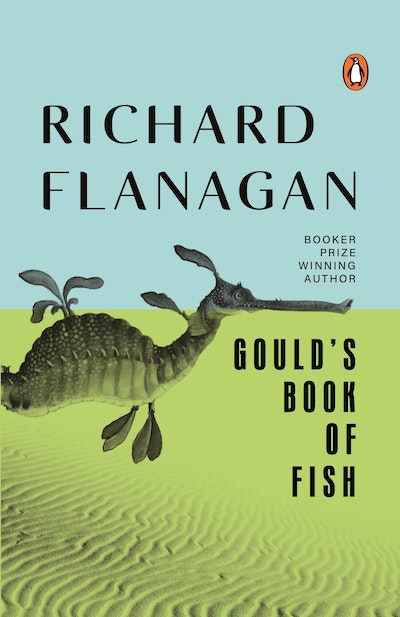
Gould's Book of Fish
FIRST PUBLISHED: 2001
This book won Richard the Commonwealth Writers Prize in 2002 for Best Book (South East Asia and South Pacific) and prompted people to start throwing the ‘m’ word around in conversation about Richard and his writing.
‘The novel has already garnered plenty of comparisons, with the scary m-word ‘masterpiece’ appearing in print more than once... Brilliantly conceived’ – Boston Globe
Once upon a time that was called 1828, before all fishes in the sea and all living things on the land were destroyed, there was a man named William Buelow Gould, a white convict who fell in love with a black woman and discovered too late that to love is not safe. Silly Billy Gould, invader of Australia, liar, murderer & forger, condemned to the most feared penal colony in the British Empire and there ordered to paint a book of fish.
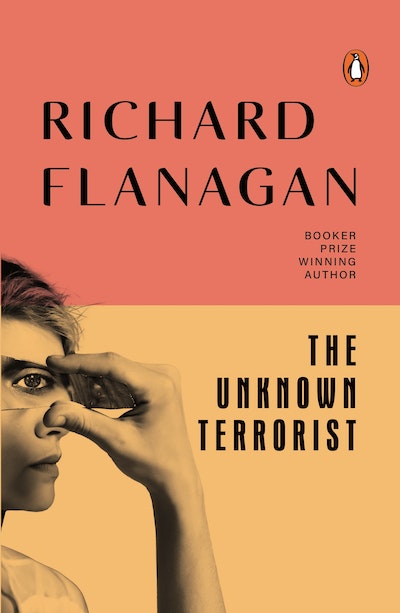
The Unknown Terrorist
FIRST PUBLISHED: 2006
What would you do if you turned on the television and saw you were the most wanted terrorist in the country? Gina Davies is about to find out.
After spending a night with an attractive stranger, she has become a prime suspect in the investigation of an attempted terrorist attack. When police find three unexploded bombs at a stadium and her enigmatic lover suddenly goes missing, Gina spends five days on the run and witnesses every truth of her life twisted into a betrayal.
The Unknown Terrorist is a relentless tour de force that paints a devastating picture of a contemporary society gone haywire, where the ceaseless drumbeat of terror-alert levels, newsbreaks, and fear of the unknown pushes one woman ever closer to breaking point.
‘...should be required reading – with eyelids pinned open, if necessary, and forced to look ... Flanagan’s tightly crafted narrative is akin to the oppressive power of Kafka’s Trial or Capote’s In Cold Blood, stark realism revealing underlying sickness. His prose glitters and shrieks with spare vitality’ – Washington Post
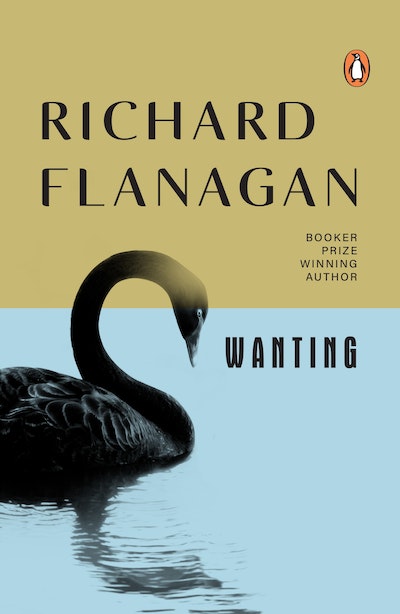
Wanting
FIRST PUBLISHED: 2008
The Times called it ‘One of the best novels of this year’ and The Sydney Morning Herald said, ‘What a voice! ... Dickens would have applauded Flanagan's style. There can be no author more passionate or unfettered than Flanagan.’
It is 1839. A young Aboriginal girl, Mathinna, is running through the long wet grass of an island at the end of the world to get help for her dying father, an Aboriginal chieftain. Twenty years later, on an island at the centre of the world, the most famous novelist of the day, Charles Dickens, realises he is about to abandon his wife, risk his name and forever after be altered because of his inability any longer to control his intense passion.
Connecting the two events are the most celebrated explorer of the age, Sir John Franklin – then governor of Van Diemen's Land – and his wife, Lady Jane, who adopt Mathinna, seen as one of the last of a dying race, as an experiment. The experiment fails, Sir John disappears into the blue ice of the Arctic seeking the Northwest Passage, and a decade later Lady Jane enlists the aid of Dickens's to put an end to the scandalous suggestions that Sir John's expedition ended in cannibalism.
Inspired by historical events, Wanting is a novel about art, love, and the way in which life is finally determined never by reason, but only ever by wanting.
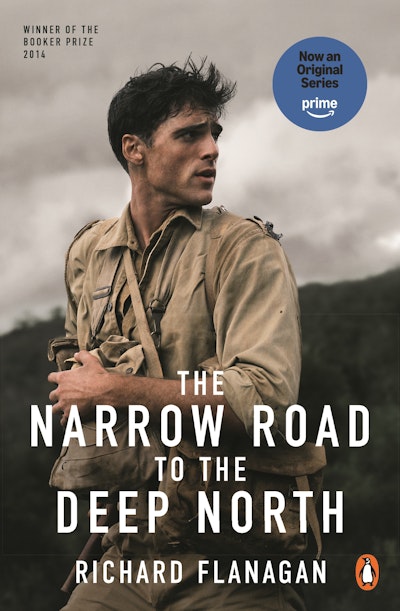
The Narrow Road to the Deep North
FIRST PUBLISHED: 2013
The Narrow Road to the Deep North won one of the world's most prestigious literary prizes, the 2014 Man Booker. Along with that, it was awarded the 2014 Western Australian Premier’s Book Award and the 2014 Independent Booksellers Award. Praised as a ‘masterpiece’ (The Guardian) – the chair of the Man Booker judging panel AC Grayling said ‘the best novels on the award's shortlist had left the judges unable to pick up another book straight after finishing them, but instead "relishing the aftertaste".’
This book took Richard 12 years to write, and his father, a survivor of the Burma Death Railway, died the day he finished the book.
‘I've been trying to write this novel for 12 years,’ he has said. ‘Other novels came and went as I continued to fail to write this one. I wrote five different versions of this book in order to find the final novel… It was the book I had to write in order to continue to keep writing.’
August, 1943. In the despair of a Japanese POW camp on the Thai-Burma death railway, Australian surgeon Dorrigo Evans is haunted by his love affair with his uncle's young wife two years earlier. Struggling to save the men under his command from starvation, from cholera, from beatings, he receives a letter that will change his life forever.
This savagely beautiful novel is a story about the many forms of love and death, of war and truth, as one man comes of age, prospers, only to discover all that he has lost.
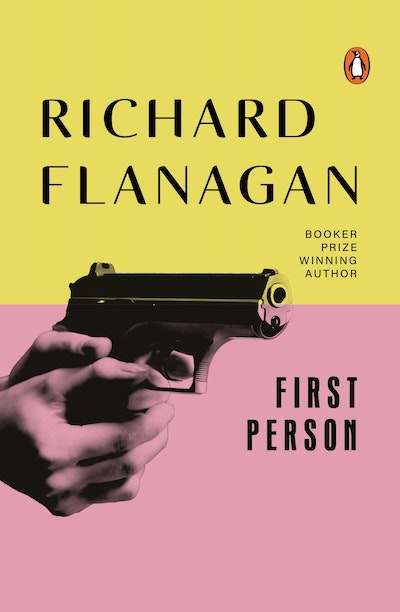
First Person
FIRST PUBLISHED: 2017
By turns compelling, comic and chilling, First Person is a haunting journey to discover the role of ‘truth’ in this age of ‘fake news’ and fabricated reality.
Kif Kehlmann, a young penniless writer, is rung in the middle of the night by the notorious con man and corporate criminal, Siegfried Heidl. About to go to trial for defrauding the banks of $700 million, Heidl offers Kehlmann the job of ghostwriting his memoir. He has six weeks to write the book, for which he’ll be paid $10,000.
As the ‘biography’ takes shape, Kehlmann fears that he is being corrupted by Heidl. And as the deadline draws closer, he becomes ever more unsure if he is ghostwriting a memoir, or if Heidl is rewriting him – his life, his future. Everything that was certain grows uncertain as he begins to wonder: who is Siegfried Heidl – and who is Kif Kehlmann?
As time runs out, one question looms above all others: what is the truth?
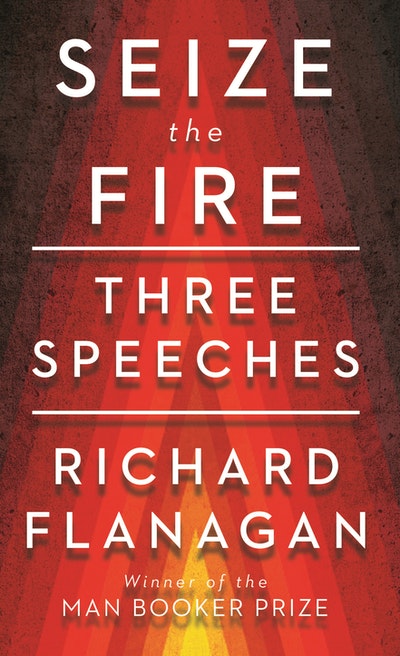
SEIZE THE FIRE
FIRST PUBLISHED 2018
In Seize the Fire, Richard argues that Australia is not a fixed entity, but a molten idea – a country with a future that is ours to shape and ours to dream anew.
Through the three speeches gathered here, Richard interweaves topics as diverse as troubadour poetry, love stories and the murder of the refugee Reza Barati; his top ten Tasmanian novels and the Australian Pacific solution; and his much-celebrated National Press Club address where he questioned the militarisation of Australian memory and argued for the need for formal Indigenous recognition.
Comic, illuminating and deeply moving, this is writing speaking to the great questions of our time and our country.