A milestone in Hemingway's career, this second collection of short stories brings to life details observed only by the eye of a uniquely gifted artist, from thr Nobel Prize-winning author of A Farewell to Arms.
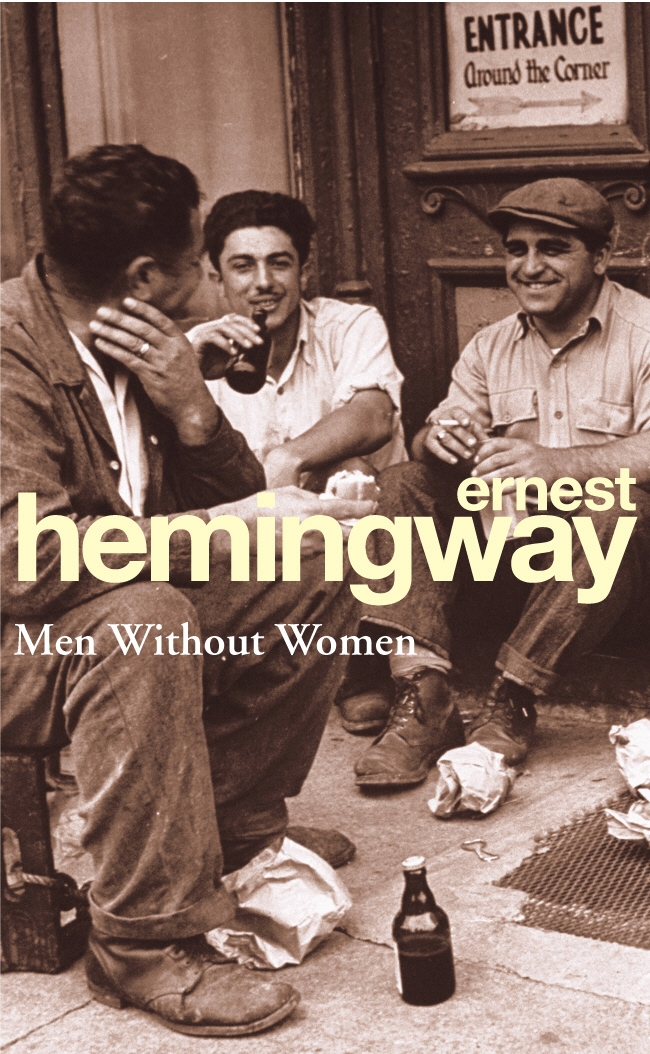
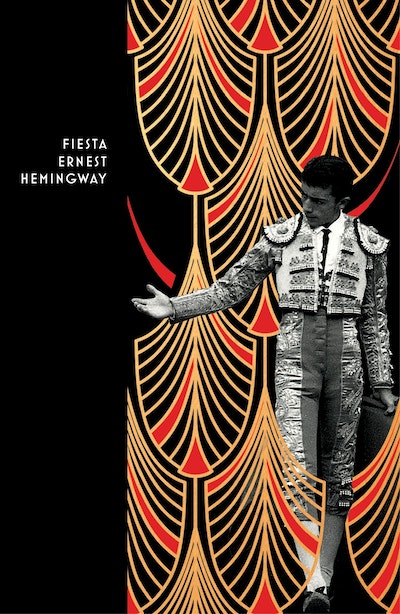
Men Without Women was a milestone in Hemingway's career. Fiesta had already established him as a novelist of exceptional power, but with these short stories, his second collection, he showed that it is possible, within the space of a few pages, to recreate a scene with absolute truth, bringing to life details observed only by the eye of a uniquely gifted artist.
Hemingway's men are bullfighters and boxers, hired hands and hard drinkers, gangsters and gunmen. Each of their stories deals with masculine toughness unsoftened by woman's hand. Incisive, hard-edged, pared down to the bare minimum, they are classic Hemingway territory - they helped establish him as one of the great literary authors of the twentieth century, and one of the best American authors of all time.
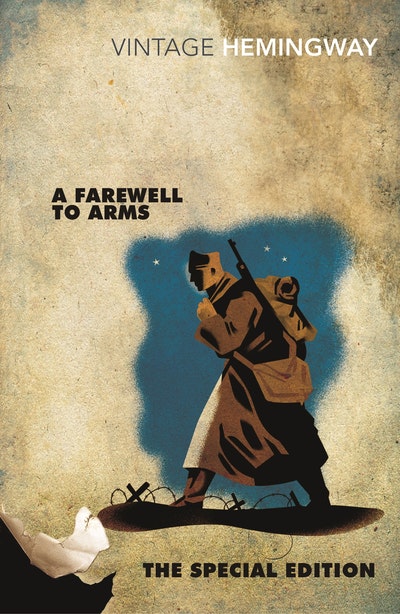
ERNEST HEMINGWAY was raised in Oak Park, Illinois, the child of a physician and a musician. After high school, he became a journalist with The Kansas City Star, before enlisting to be an ambulance driver in World War I. He returned home after a serious injury in 1918, but his military experience informed his fiction, especially A Farewell to Arms. He worked as a war correspondent for The Toronto Star during his first marriage, and over the next three marriages he would live in Paris, London, Key West, and Cuba. He published seven novels, six short story collections, and two nonfiction titles. On safari in Africa in 1952 he survived two plane crashes, though his obituaries ran prematurely. He lived on to win the Nobel Prize in Literature in 1954. Two trunks of his early work from Paris reappeared in 1957, and inspired him to write his memoir A Moveable Feast. He eventually committed suicide in Idaho in 1961.