> Skip to content
[]
  • Published: 15 March 1954
  • ISBN: 9780440378648
  • Imprint: Bantam Dell
  • Format: Paperback
  • Pages: 528
  • RRP: $24.99

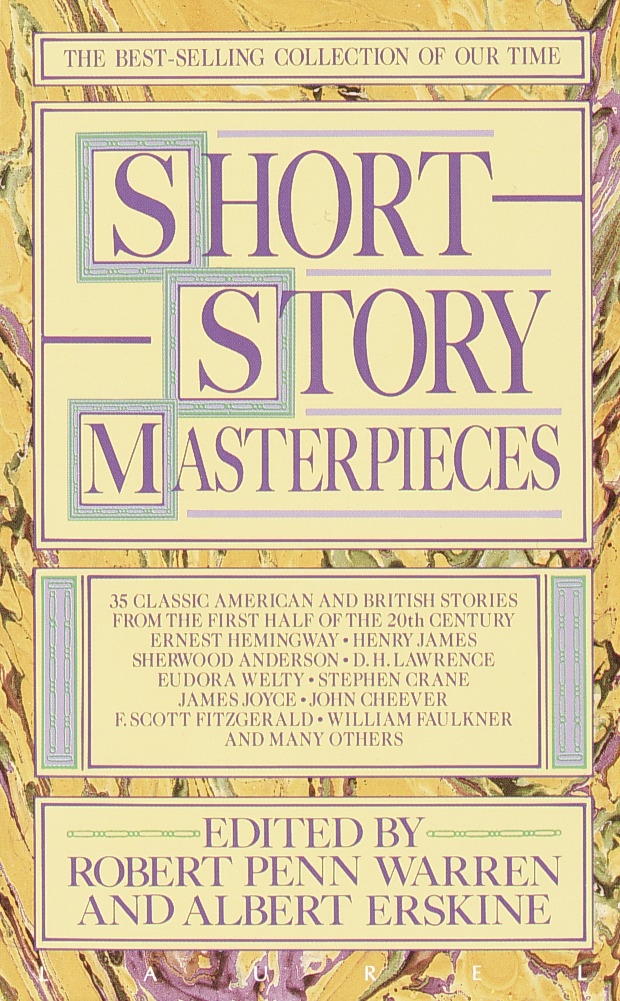
Short Story Masterpieces

35 Classic American and British Stories from the First Half of the 20th Century


A truly exceptional collection of thirty-five great stories from some of the most celebrated writers of the first half of the twentieth century

Short stories can be funny, pathetic, frightening, uplifting, nostalgic, beautiful—and it is just this variety that makes them the popular and satisfying reading they are. Here are thirty-five of the best stories by British and American writers in the first half of the twentieth century, in an outstanding anthology that ranges in kind from the humor of James Thurber and Ring Lardner to the irony of Ernest Hemingway and James Joyce.

Each story is different from every other—but each bears the stamp of unmistakable greatness, including:

• “The Bride Comes to Yellow Sky” by Stephen Crane
• “The Horse Dealer’s Daughter” by D. H. Lawrence
• “Barn Burning” by William Faulkner
• “The Sojourner” by Carson McCullers
• “The Open Window” by Saki
• “Flowering Judas” by Katherine Anne Porter
• “The Boarding House” by James Joyce
• “Soldier’s Home” by Ernest Hemingway
• “The Tree of Knowledge” by Henry James
• “Why I Live at the P.O.” by Eudora Welty

Editors Robert Penn Warren and Albert Erskine selected stories that broke new ground and challenged the imagination with their style, subject matter, or tone: the unforgettable, enduring works that shaped the literature of our time.
  • Published: 15 March 1954
  • ISBN: 9780440378648
  • Imprint: Bantam Dell
  • Format: Paperback
  • Pages: 528
  • RRP: $24.99

About the authors

Robert Penn Warren

Robert Penn Warren (1905-1989) was born in Guthrie, Kentucky. In his lifetime he won three Pulitzer Prises, the National Book Award, the National Medal for Literature, and the Presidential Medal of Freedom. In 1986 he was named the country s first Poet Laureate.

Ernest Hemingway

ERNEST HEMINGWAY was raised in Oak Park, Illinois, the child of a physician and a musician. After high school, he became a journalist with The Kansas City Star, before enlisting to be an ambulance driver in World War I. He returned home after a serious injury in 1918, but his military experience informed his fiction, especially A Farewell to Arms. He worked as a war correspondent for The Toronto Star during his first marriage, and over the next three marriages he would live in Paris, London, Key West, and Cuba. He published seven novels, six short story collections, and two nonfiction titles. On safari in Africa in 1952 he survived two plane crashes, though his obituaries ran prematurely. He lived on to win the Nobel Prize in Literature in 1954. Two trunks of his early work from Paris reappeared in 1957, and inspired him to write his memoir A Moveable Feast. He eventually committed suicide in Idaho in 1961.

William Faulkner

Born in 1897 in New Albany, Mississippi, William Faulkner was the son of a family proud of their prominent role in the history of the south. He grew up in Oxford, Mississippi, and left high school at fifteen to work in his grandfather's bank. Rejected by the US military in 1915, he joined the Canadian flyers with the RAF, but was still in training when the war ended. Returning home, he studied at the University of Mississippi and visited Europe briefly in 1925. His first poem was published in The New Republic in 1919. His first book of verse and early novels followed, but his major work began with the publication of The Sound and the Fury in 1929. As I Lay Dying (1930), Sanctuary (1931), Light in August (1932), Absalom, Absalom! (1936) and The Wild Palms (1939) are the key works of his great creative period leading up to Intruder in the Dust (1948). During the 1930s, he worked in Hollywood on film scripts, notably The Blue Lamp, co-written with Raymond Chandler. William Faulkner was awarded the Nobel Prize for Literature in 1949 and the Pulitzer Prize for The Reivers just before his death in July 1962.