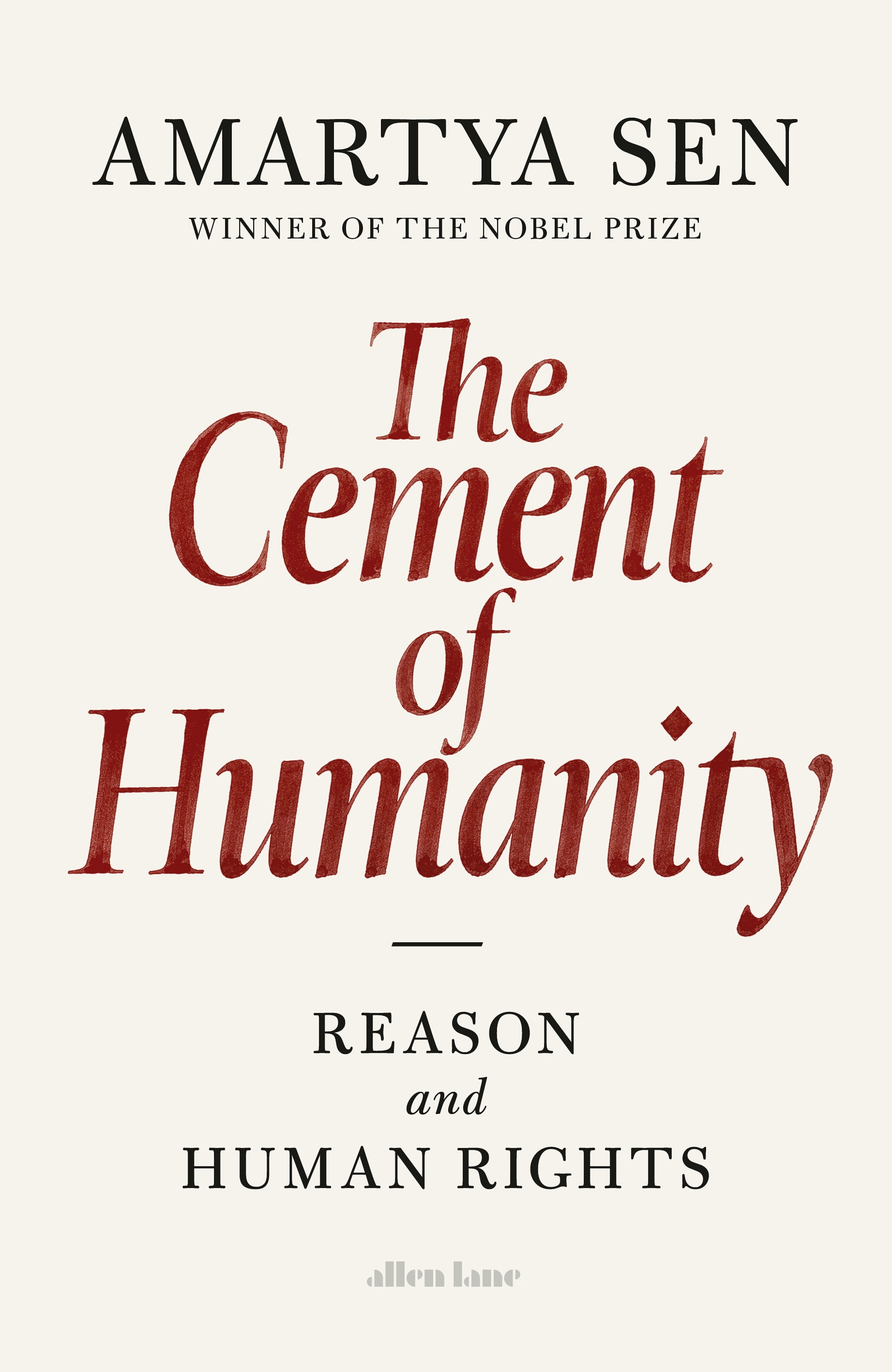
We live in a world of deep deprivations. Billions lack access to health care and education. A great many people live on incomes below the poverty line. Political dissent is brutally suppressed in many parts of the world and a million or more are held in jail for speaking truth to power. At a time when human rights are being dismissed ever more forcefully, Amartya Sen argues that their foundation lies not in the goodwill of governments or the survival of enlightened institutions, but something far more powerful and enduring: our ability to reason.
The Cement of Humanity presents a reasoned investigation of the idea and usefulness of human rights. Engaging with rich traditions of reasoning – from the arguments of Gautama Buddha in the 5th century BCE to Magna Carta and the work of Enlightenment thinkers like David Hume, Adam Smith, Thomas Paine and Mary Wollstonecraft – the book shows that human rights are the product of many cultures and civilizations across the world.
Sen also extends and reorients the works of John Rawls, Kenneth Arrow and other contemporary thinkers. He argues that we should abandon the common insistence on the ability to compare and rank every choice (as in standard moral theory such as Benthamite utilitarianism) and shows the limits of our reliance on the social contract approach of Hobbes, Locke, Rousseau and others. The book also explores the diverse relations between factual recognition and moral obligation, allowing room for constructive reasoning. Crucially, it demonstrates the possibility of social choice accommodating a plurality of values.
Philosophically rigorous, bracingly practical and full of Sen’s characteristic acuity, this is a remarkable treatise from one of the world’s leading public intellectuals.