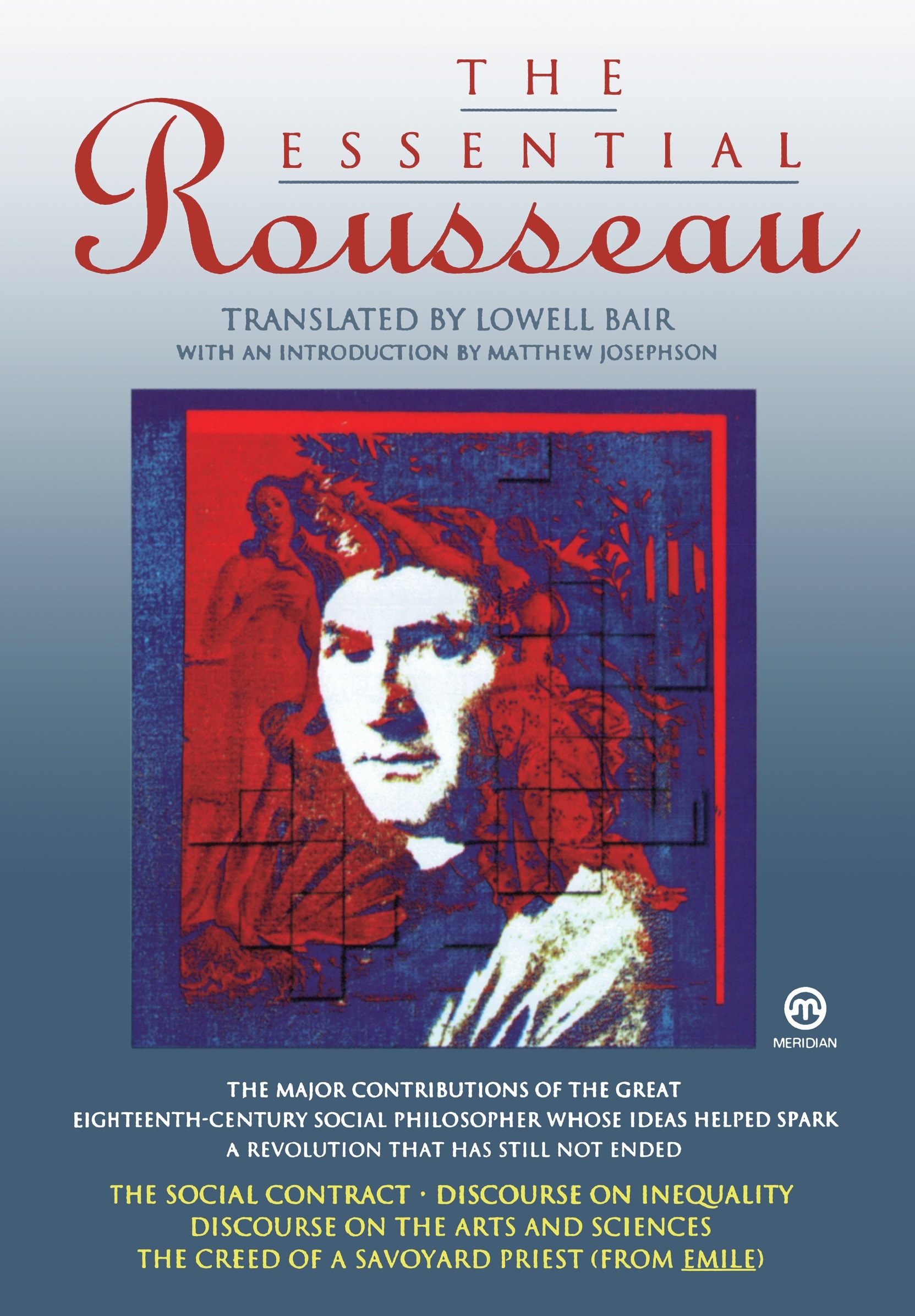
With splendid new translations, these four major works offer a superlative introduction to a great social philosopher whose ideas helped spark a revolution that has still not ended.
Can individual freedom and social stability be reconciled? What is the function of government? What are the benefits and liabilities of civilization? What is the original nature of man, and how can he most fully realize his potential?
These were the questions that Jean-Jacques Rousseau investigated in works that helped set the stage for the French Revolution and have since stood as eloquent expressions of revolutionary views, not only in politics but also in such areas as personal lifestyles and educational practices. Rousseau’s concepts of the natural goodness of man, the corrupting influence of social institutions, and the right and the power of the people to overthrow their oppressors and create new and more responsive forms of government and society are as richly relevant today as they were in eighteenth-century France.
Includes: The Social Contract Discourse on Inequality Discourse on the Arts and Sciences “The Creed of a Savoyard Priest” (from Emile)
Peter Constantine's honors include the PEN Translation Prize, the National Translation Award, the Helen and Kurt Wolff Translation Prize, and Greece’s Translators of Literature Prize. He translated Machiavelli’s The Prince for Vintage Classics.
Jean-Jacques Rousseau was born in Geneva in 1712. He was a writer and political theorist of the Enlightenment. In 1750 he published his first important work 'A Discourse on the Sciences and the Arts' (1750) where he argued that man had become corrupted by society and civilisation. In 1755, he published 'Discourse on the Origin of Inequality' and in 'The Social Contract' (1762) he argued, "Man is born free, and everywhere he is in chains". This political treatise earned him exile from his home city of Geneva and arguably inspired the French Revolution (his ashes were transferred to the Pantheon in Paris in 1794). He also wrote 'Èmile', a treatise on education and 'The New Eloise' (1761). This novel scandalised the French authorities who ordered Rousseau's arrest. In his last 10 years, Rousseau wrote his 'Confessions'. In The Confessions he remembers his adventurous life, his achievements and the persecution he suffered from opponents. His revelations inspired the likes of Proust, Goethe and Tolstoy among others. Rousseau died on 2 July in France in 1778.