> Skip to content
[]
  • Published: 4 January 2011
  • ISBN: 9781609803179
  • Imprint: RH US eBook Adult
  • Format: EBook
  • Pages: 240

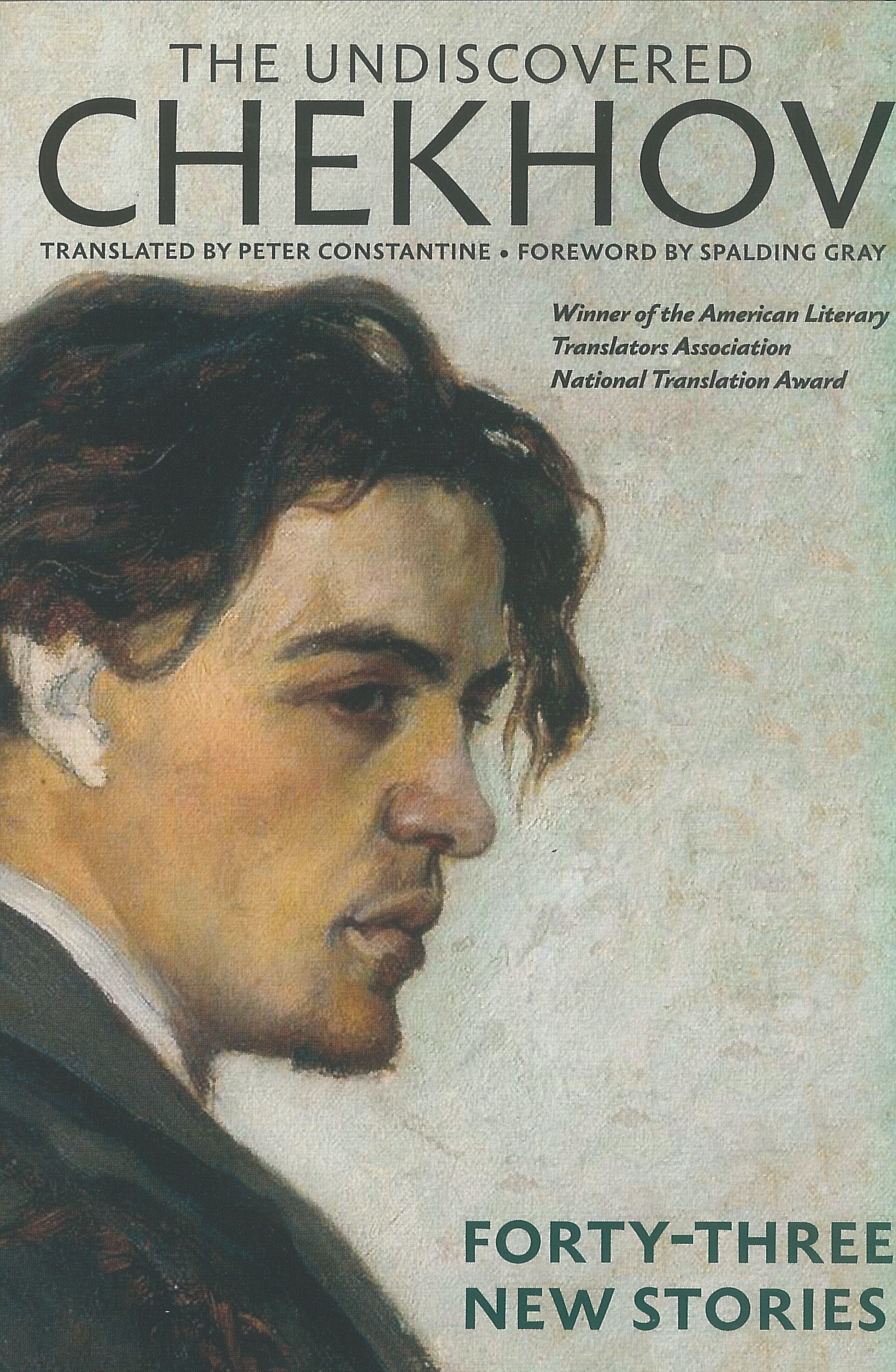
The Undiscovered Chekhov

Forty-Three New Stories


The Undiscovered Chekhov gives us, in rich abundance, a new Chekhov. Peter Constantine's historic collection presents 38 new stories and with them a fresh interpretation of the Russian master. In contrast to the brooding representative of a dying century we have seen over and over, here is Chekhov's work from the 1880s, when Chekhov was in his twenties and his writing was sharp, witty and innovative.
Many of the stories in The Undiscovered Chekhov reveal Chekhov as a keen modernist. Emphasizing impressions and the juxtaposition of incongruent elements, instead of the straight narrative his readers were used to, these stories upturned many of the assumptions of storytelling of the period.
Here is "Sarah Bernhardt Comes to Town," written as a series of telegrams, beginning with "Have been drinking to Sarah's health all week! Enchanting! She actually dies standing up!..." In "Confession...," a thirty-nine year old bachelor recounts some of the fifteen times chance foiled his marriage plans. In "How I Came to be Lawfully Wed," a couple reminisces about the day they vowed to resist their parents' plans that they should marry. And in the more familiarly Chekhovian "Autumn," an alcoholic landowner fallen low and a peasant from his village meet far from home in a sad and haunting reunion in which the action of the story is far less important than the powerful impression it leaves with the reader that each man must live his life and has his reasons.
  • Published: 4 January 2011
  • ISBN: 9781609803179
  • Imprint: RH US eBook Adult
  • Format: EBook
  • Pages: 240

About the authors

Anton Chekhov

ANTON CHEKHOV (1860–1904) is regarded as one of the world’s masters of the short story. The son of a hapless shopkeeper and grandson of a former serf, Chekhov began at the age of twenty to support his family through the publication of magazine pieces. The writing of these short works—many of which were collected in English for the first time in Seven Stories’ Undiscovered Chekhov and Little Apples—served as the author’s apprenticeship in literature, which was undertaken simultaneously with his studies to become a doctor. Both of these educations would leave their mark on the rising author. By the 1890s Chekhov had moved on to weightier journals, and he had drifted away from the practice of medicine; but his work would always be characterized by the copywriter’s vividness and the sober exactitude of a scientist. In an age of literary aristocrats, Chekhov did as much as any modern writer to democratize the profession. He used his talent to examine the lives of street urchins, déclassé provincials and frustrated reformers. By the time of his death from tuberculosis in 1904, all Russia and much of the world had taken heed of his credo: “For chemists there is nothing unclean on the earth. The writer must be as objective as the chemist.”

Peter Constantine

Translator PETER CONSTANTINE's Six Early Stories by Thomas Mann received the 1997 PEN/Book-of-the-Month Club Translation Prize and was cited by the New York Times as a “Notable Book of the Year.” His work has appeared in the New Yorker and Harper’s, among other publications, and he translated the early stories of Anton Chekov in The Undiscovered Checkov and Little Apples. He lives in New York City.