> Skip to content
[]
  • Published: 10 November 2026
  • ISBN: 9780262056588
  • Imprint: MIT Press
  • Format: Hardback
  • Pages: 216
  • RRP: $75.00

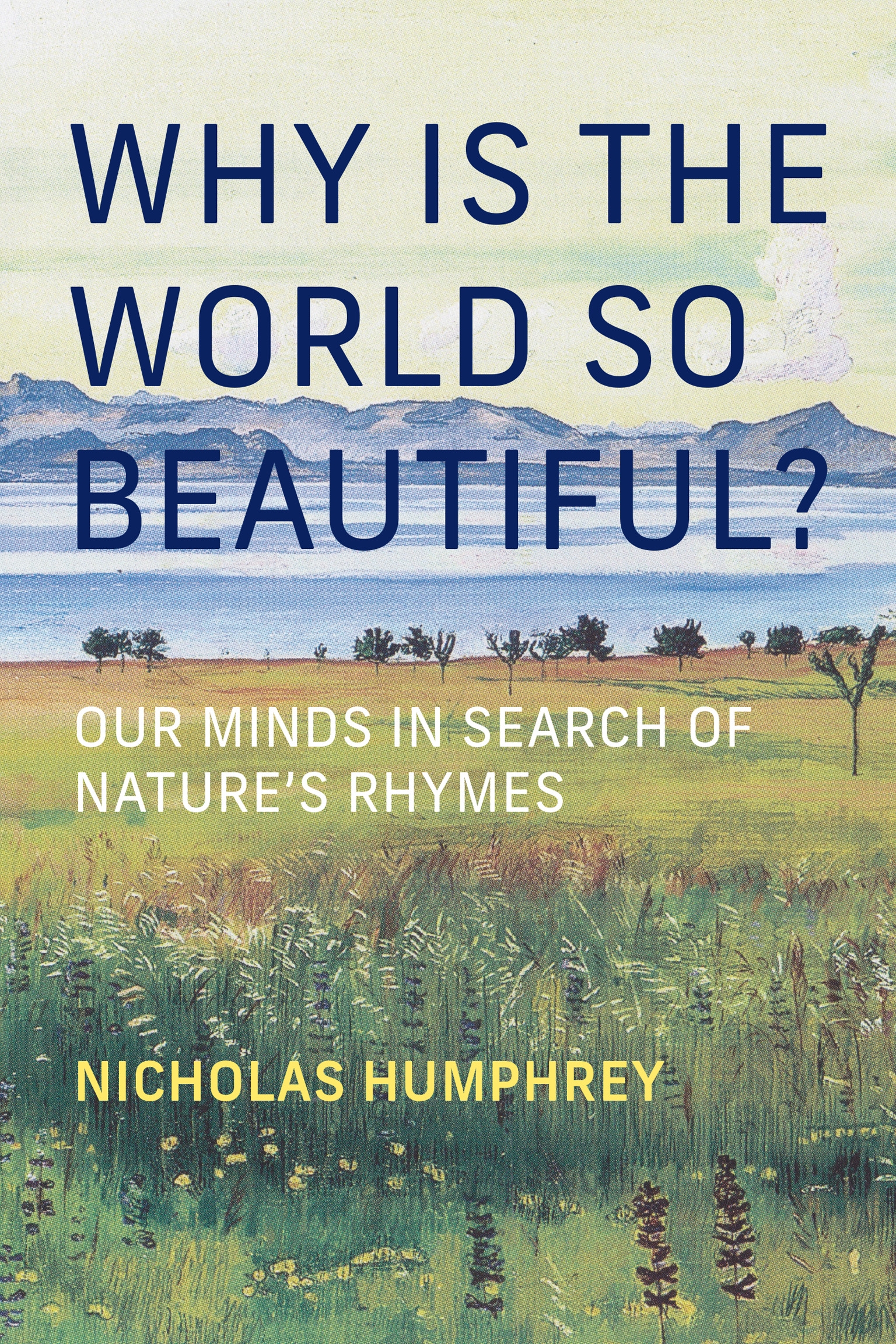
Why Is the World So Beautiful?

Our Minds in Search of Nature's Rhymes


A fascinating inquiry into why beauty matters and how it has played an evolutionary role in our understanding of the world.

From a pioneering neuropsychologist and the winner of the Mind and Brain Prize.

Why do we love beauty? And why is the world so full of it? From rainbows and mountain landscapes to piano sonatas and Cezanne paintings, much of what we find beautiful seems to serve no practical purpose, despite our instinctive attraction to it. In this path-breaking book Why Is the World So Beautiful?, psychologist Nicholas Humphrey explains that the benefits of being drawn to beauty are primarily cognitive: we’re training our minds.

Inspired by a line from the poet Gerard Manley Hopkins, that “all beauty may be called rhyme,” the author argues that by actively searching for rhyming connections between things, we establish the “mental models” that guide our understanding of the world. These rhymes extend beyond sounds to shapes, colors, objects, and even abstract ideas. Just as we need food to nourish our bodies, we need rhymes to nourish our minds.

Our attraction to rhymes and patterns culminates in a uniquely human form of aesthetic emotion, one that recognizes that all artistry must issue from an artist.  This leads Humphrey to his boldest claim: when we encounter beauty in the natural world, we are responding as if to a hidden artist’s—or Creator’s—hand. The result is a daring and illuminating argument for why beauty moves us—and why our hunger for it is as fundamental as our need for meaning itself.

  • Published: 10 November 2026
  • ISBN: 9780262056588
  • Imprint: MIT Press
  • Format: Hardback
  • Pages: 216
  • RRP: $75.00

Also by Nicholas Humphrey

See all

Praise for Why Is the World So Beautiful?

"There is a shelf in my brain – and in my study too – where I store theories of consciousness, and this is where psychologist Nicholas Humphrey’s new book, Sentience, will reside....Sentience is full of provocative ideas, as well as lively anecdotes from decades of pondering these issues. Humphrey’s thesis offers a great deal to think about." -- Philip Ball, New Scientist

"Humphrey’s arguments are both plausible and lucid, the product of exhaustive research and decades spent weighing the possibilities....Whether agreeing with him in full, in part, or not at all, the text is a stimulating exercise in experiment and speculation." -- Kirkus Reviews