- Published: 30 March 2027
- ISBN: 9780807022566
- Imprint: Beacon Press
- Format: Hardback
- Pages: 264
- RRP: $80.00
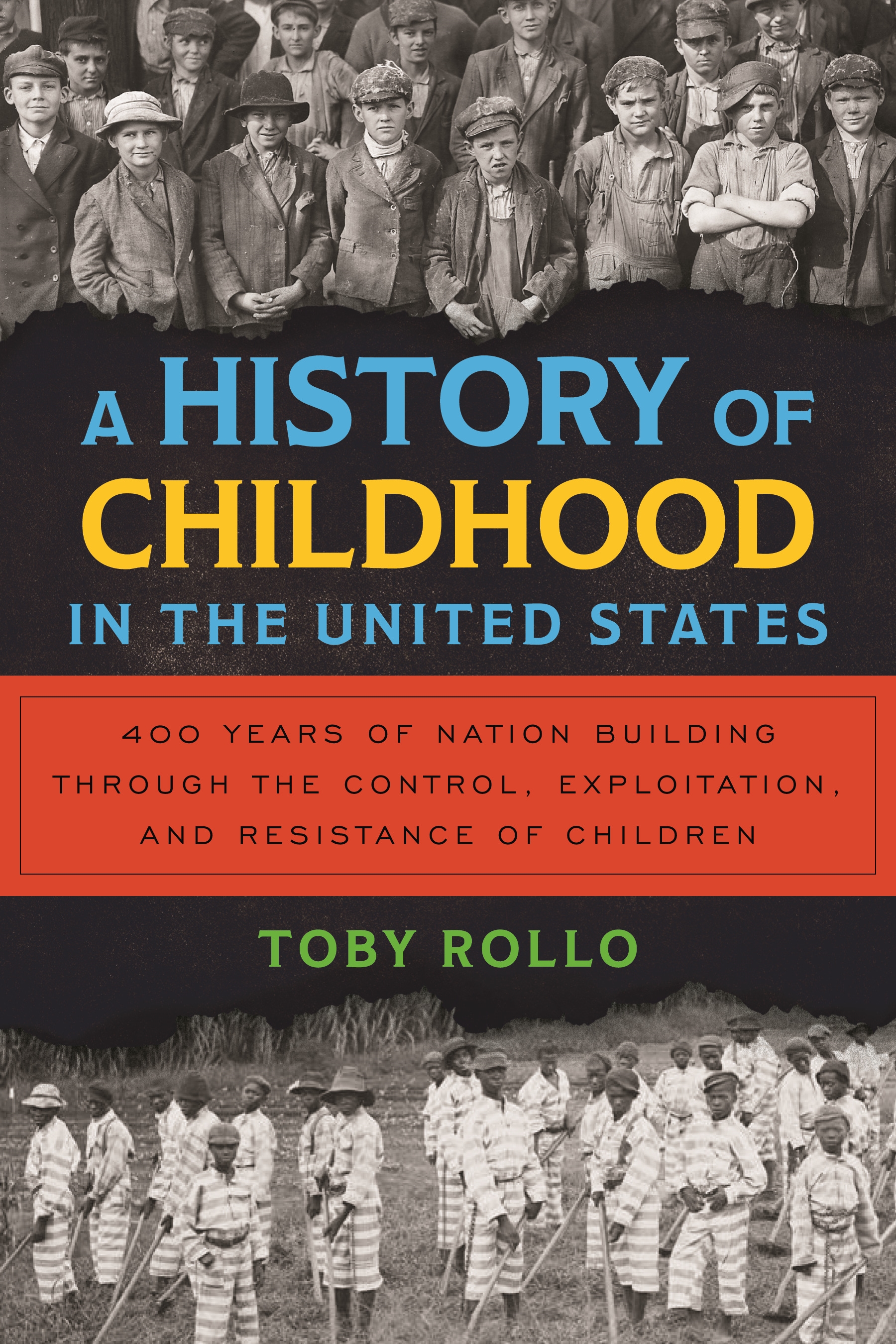
A History of Childhood in the United States
400 Years of Nation Building Through the Control, Exploitation, and Resistance of Children


- Published: 30 March 2027
- ISBN: 9780807022566
- Imprint: Beacon Press
- Format: Hardback
- Pages: 264
- RRP: $80.00
"A History of Childhood in the United States matters because it forces a truth American history has long evaded: You cannot understand the making of this country without examining how it was built, not only through the exploitation of labor, land, and bodies but through the exploitation of children. From colonial households to plantations, factories, and classrooms, children were disciplined, worked, and shaped to sustain the American project. By centering childhood as a site of power and extraction, Toby Rollo forces an honest reckoning with how freedom for some has always depended on the repression of the young.”', Stacey Patton, author of Strung Up: How White America Learned to Lynch Black Children
'"A History of Childhood in the United States matters because it refuses to leave children at the margins of American history as symbols, side notes, or sentimental props. It confronts what the scholarship has too often avoided: You cannot understand the making of this country without reckoning with what was done to children, and what was stolen from them. Where many histories isolate child labor or focus narrowly on ideas of childhood, this book reveals the larger throughline. From colonial households to plantations, factories, and classrooms, children were worked, disciplined, and shaped in ways that made the American project possible. Rollo’s incisive book does not simply add children to the story; it shows that the story itself does not make sense without them. By centering childhood as a site of power and extraction, Rollo exposes the contradiction at the heart of the American Dream and forces a more honest reckoning with how freedom for some has always depended on the repression of the young.”', Stacey Patton, author of Strung Up: How White America Learned to Lynch Black Children
'“This book dismantles one of the country’s most enduring myths: that the history of childhood is a steady advance from labor, patriarchal authority, and religious discipline toward protection, freedom, and rights. The history it uncovers is far more unsettling. Childhood was never simply a sheltered world of play and innocence. It was one of the principal means by which the nation sorted children into unequal futures by race, class, and gender. As physical labor receded, commercial culture, schools, juvenile courts, families, and welfare agencies imposed new forms of discipline, surveillance, and expectation. The book asks readers to abandon comforting claims about a nation that loves its children and confronts how unequally this country has distributed safety, autonomy, and opportunity among the young.”', Steven Mintz, professor of history, The University of Texas at Austin and author of Huck's Raft: A History of American Childhood
'“Rollo’s beautifully written book is an earth-shattering achievement in the study of US history that should be required reading in the field. Placing children and childhood at this history’s center, from pre-colonial times to the present, is nothing short of revolutionary.”', John Wall, author of Give Children the Vote: On Democratizing Democracy