- Published: 15 September 2014
- ISBN: 9781590176658
- Imprint: NY Review Books
- Format: Paperback
- Pages: 288
- RRP: $40.00
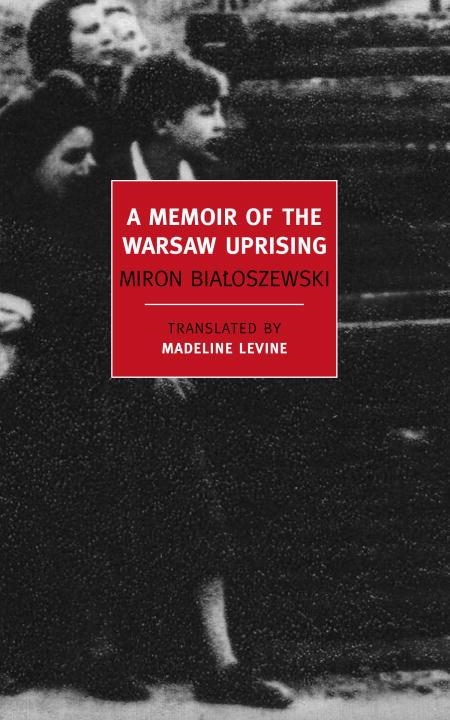
A Memoir of the Warsaw Uprising


- Published: 15 September 2014
- ISBN: 9781590176658
- Imprint: NY Review Books
- Format: Paperback
- Pages: 288
- RRP: $40.00
"A master of grammatical games, puns, and colloquial speech patterns, this dark-minded, philosophically inclined scrutinizer of the humblest objects of daily life is enjoying more popularity and critical attention a quarter century after his death than during his lifetime. Outside of Poland, he remains best known for his Memoir of the Warsaw Uprising." --The Iowa Review
"Białoszewski very quickly emerged, surfaced for me as the most exciting and most intriguing Polish writer of what now would be the second half of the century." --Chicago Review
"Białoszewski demonstrates that each loss also offers a new way of seeing and something new to see, even if what comes into view is only a 'grey naked hole.' He manages to generate a new form from absence and emptiness as the 'greynakedhole' takes on a life of its own. Seen this way, the world's inescapable losses generate not only pain, but also creative possibility and even perhaps 'inexhaustible joy.'" --Clare Cavanaugh, Partisan Review
"This most 'private' author of postwar Polish literature disregards discourses of history so deeply embedded in the Polish literary tradition; rather he focuses on the mundane aspects of the everyday life, usually from an autobiographical perspective and using an overtly colloquial language. Although Białoszewski's works have stirred many discussions, most of these have focused on his treatment of genres and language." --Joanna Nizynska, professor of Polish at Harvard University
"A great post-war Polish poet, Białoszewski wrote work radically different from that of his contemporaries--Miłosz, Świr, Kamieńska, Herbert, and Szymborska--but his poetry was just as powerful and important to the development of the contemporary European lyric ... When I mentioned [him] to Tomaž Šalamun in a recent conversation, Tomaž's face lit up: 'Białoszewski, when he is translated and available in English, will cause an explosion in American poetry!' One hopes so." --Ilya Kaminsky, poetry editor at Words Without Borders