> Skip to content
[]
  • Published: 2 February 2027
  • ISBN: 9798896230991
  • Imprint: NY Review Books
  • Format: Paperback
  • Pages: 120
  • RRP: $36.00
Categories:

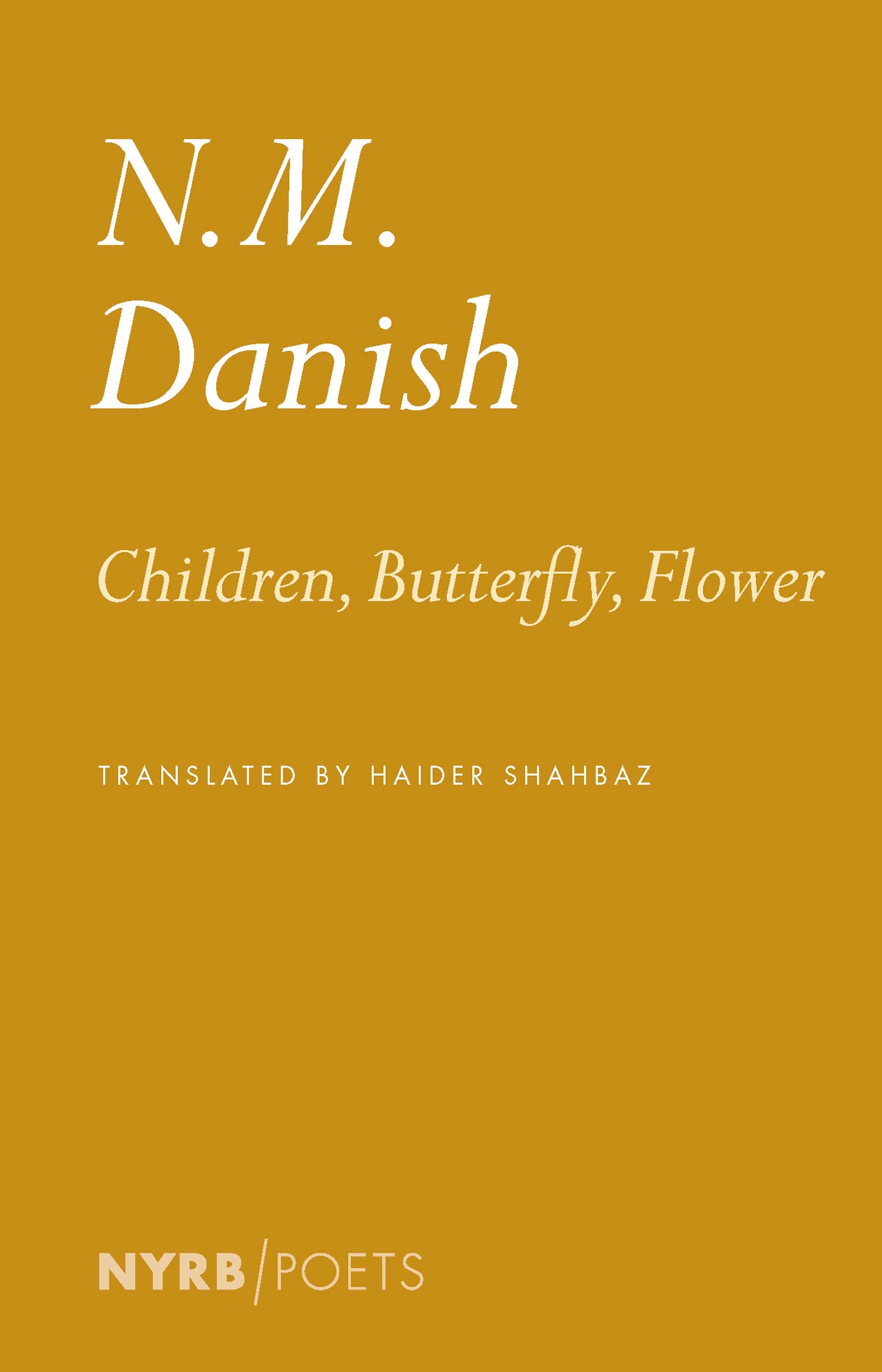
Children, Butterfly, Flower


Powerful, disquieting poems from the Black Pakistani experience by one of Urdu literature's finest practitioners, now in English for the first time.

For the past four decades, N. M. Danish has been creating one of the most singular bodies of work in Urdu poetry, one grounded within the African diasporic literary tradition of Négritude that also draws on classical Urdu forms to create a black, leftist poetics that is entirely his own.

A black Pakistani poet of African and Baloch descent, Danish grew up in Karachi, in the working-class neighborhood of Lyari. Shaped by the tradition of labor activism in Lyari, and influenced by the Négritude movement and the Harlem Renaissance, Danish utilizes both free verse and the more traditional form of the ghazal to create haunting, atmospheric poems full of stark imagery, in which a sense of repression and disquiet pervades, yet the possibility of political resistance persists.

Bringing together work from Danish’s only published collection, as well as later poems written after emigrating to the US, Children, Butterfly, Flower marks the publication of a unique and powerfully modern voice, in the first English language translation of a black poet from South Asia.

  • Published: 2 February 2027
  • ISBN: 9798896230991
  • Imprint: NY Review Books
  • Format: Paperback
  • Pages: 120
  • RRP: $36.00
Categories:

Praise for Children, Butterfly, Flower

“Congratulations on this moving, powerful work. The translations are lyrical and beautiful, and the little sonic and aural rhymes and resonances the translator has found in English give a glimpse of what Danish might be attempting in Urdu. I think these English translations work well, and some of the poems, such as 'Lyari' and the 'Ghazal' poems are particularly haunting. That refrain of "there is a strange terror" strikes me as both specific to Danish's experience and also so relevant in a domestic, regional and global sense now. I urge the translator to keep translating Danish's poetry since poetry translated from Urdu in the US remains relatively rare, and of course poetry 1) by non-US Black poets in translation and 2) by poets from South Asia and especially Black South Asian poets is extremely rare.” —John Keene, author of Punks: New & Selected Poems