> Skip to content
[]
  • Published: 20 May 2008
  • ISBN: 9780553905106
  • Imprint: RH US eBook Adult
  • Format: EBook
  • Pages: 896

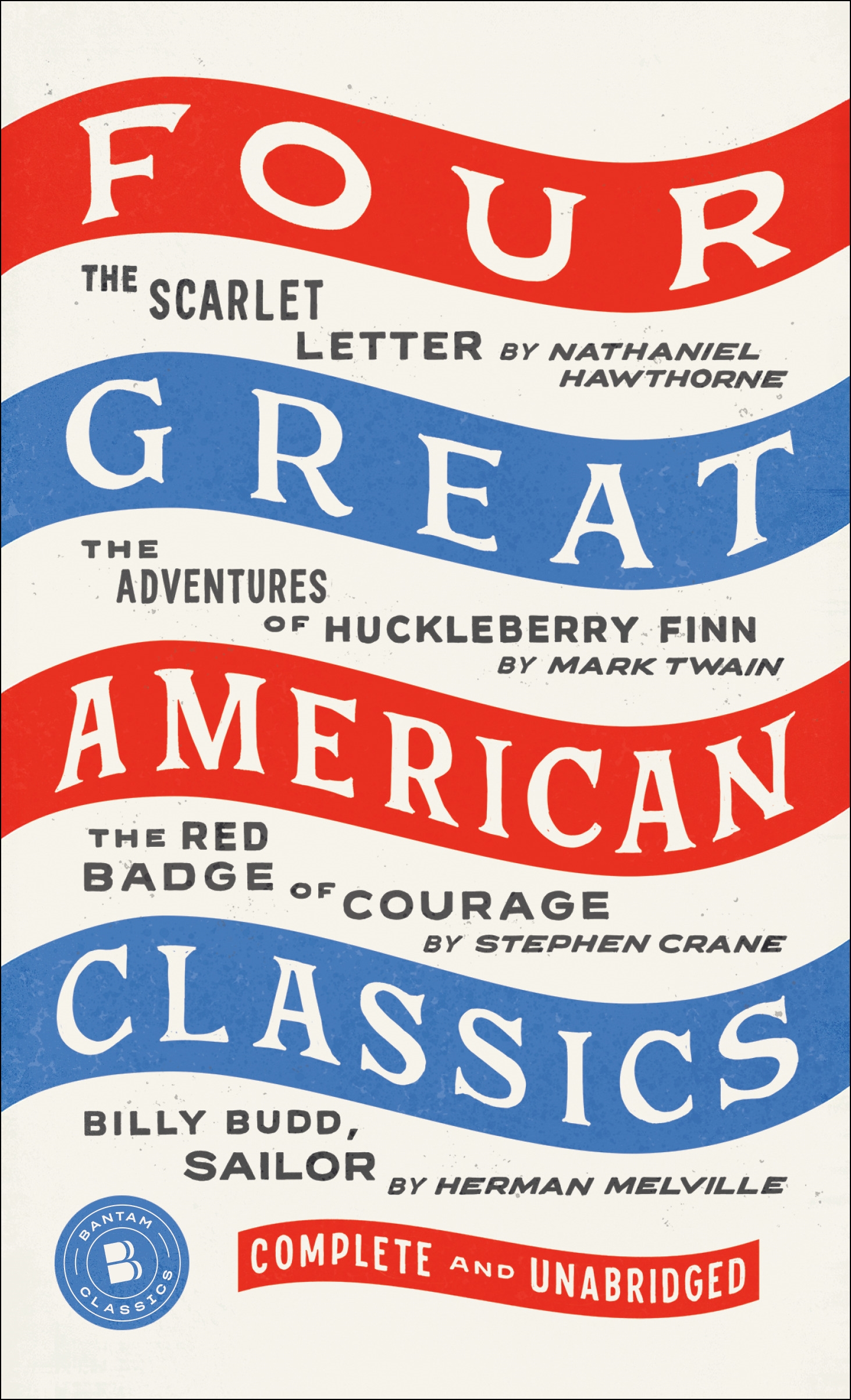
Four Great American Classics


A stunning collection of four American literary tour de forces: The Scarlet Letter, The Adventures of Huckleberry Finn, The Red Badge of Courage, and Billy Budd, Sailor

These four landmark novels of nineteenth-century American literature have gained a permanent place in our culture as great classics. They are not only part of our national heritage, but masterpieces of world literature whose deep and lasting influence is felt to this day.

In The Scarlet Letter, Nathaniel Hawthorne vividly records America’s moral and historical roots in Puritan New England and masterfully re-creates a society’s preoccupation with sin, guilt, and pride.

Mark Twain’s The Adventures of Huckleberry Finn carries readers along on Huck’s unforgettable journey down the Mississippi in America’s foremost comic epic—the first great novel in a truly American voice.

The Red Badge of Courage by Stephen Crane re-creates the brutal reality of war and its psychological impact on a young Civil War soldier in one of the most moving and widely read American novels.

Herman Melville’s Billy Budd, Sailor joins the world’s great tragic literature as a doomed seaman becomes the innocent victim of a clash between social authority and individual freedom.
  • Published: 20 May 2008
  • ISBN: 9780553905106
  • Imprint: RH US eBook Adult
  • Format: EBook
  • Pages: 896

About the author

Herman Melville

Herman Melville was born in New York City in 1819. When his father died, he was forced to leave school and find work. After passing through some minor clerical jobs, the eighteen-year-old young man shipped out to sea, first on a short cargo trip, then, at twenty-one, on a three-year South Sea whaling venture. From the experiences accumulated on this voyage would come the material for his early books, Typee (1846) and Omoo (1847), as well as for such masterpieces as Moby-Dick (1851), Pierre (1852), The Piazza Tales (1856), and Billy Budd, Sailor, and Other Stories (posthumous, 1924). Though the first two novels—popular romantic adventures—sold well, Melville's more serious writing failed to attract a large audience, perhaps because it attacked the current philosophy of transcendentalism and its espoused "self-reliance." (As he made clear in the savagely comic The Confidence Man (1857), Melville thought very little of Emersonian philosophy.) He spent his later years working as a customs inspector on the New York docks, writing only poems comprising Battle-Pieces (1866). He died in 1891, leaving Billy Budd, Sailor, and Other Stories unpublished.

Also by Herman Melville

See all