- Published: 12 May 2026
- ISBN: 9781804998823
- Imprint: Penguin
- Format: Paperback
- Pages: 608
- RRP: $35.00
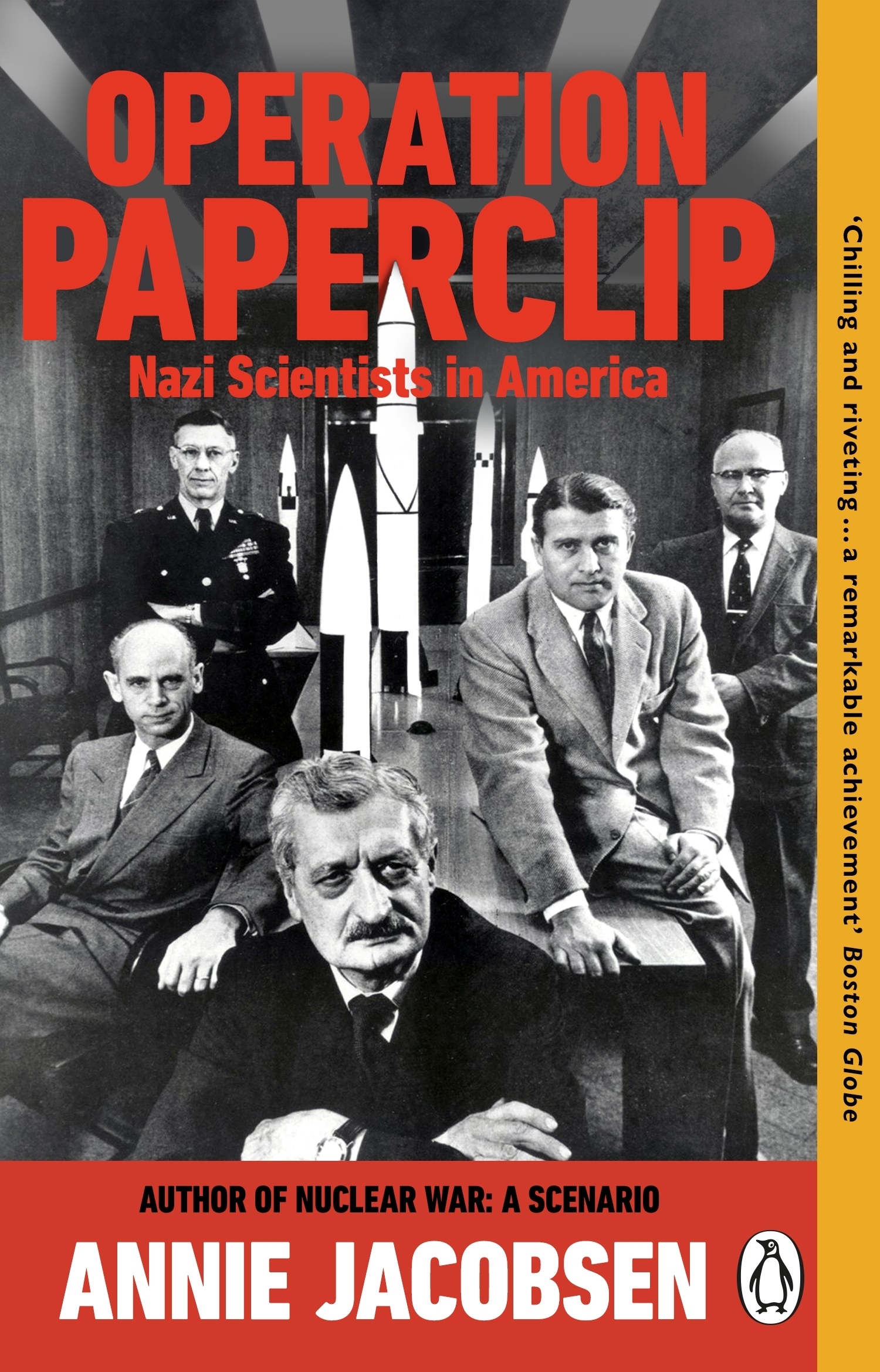
Operation Paperclip
Nazi Scientists in America




- Published: 12 May 2026
- ISBN: 9781804998823
- Imprint: Penguin
- Format: Paperback
- Pages: 608
- RRP: $35.00

Important, superbly written. . . . Jacobsen’s book allows us to explore these questions with the ultimate tool: hard evidence. She confronts us with the full extent of Paperclip’s deal with the devil, and it’s difficult to look away.
Matt Damsker, USA Today
With Annie Jacobsen’s Operation Paperclip for the first time the enormity of the effort has been laid bare. The result is a book that is at once chilling and riveting, and one that raises substantial and difficult questions about national honor and security. . . .This book is a remarkable achievement of investigative reporting and historical writing, but it is a moral force as well as a literary tour de force.
David M. Shribman, Boston Globe
The most in-depth account yet of the lives of Paperclip recruits and their American counterparts. . . . Jacobsen deftly untangles the myriad German and American agencies and personnel involved. . . . More gripping and skillfully rendered are the stories of American and British officials who scoured defeated Germany for Nazi scientists and their research.
Wendy Lower, New York Times Book Review
Darkly picaresque. . . . Jacobsen persuasively argues that the mindset of the former Nazi scientists who ended up working for the American government may have exacerbated Cold War paranoia.
The New Yorker
Jacobsen uses newly released documents, court transcripts, and family-held archives to give the fullest accounting yet of this endeavor.
Maureen Callahan, New York Post
The moral issues it raises are disturbing and even perhaps profound.
Howard Schneider, Wall Street Journal
Annie Jacobsen’s Operation Paperclip is a superb investigation, showing how the U.S. government recruited the Nazis’ best scientists to work for Uncle Sam on a stunning scale. Sobering and brilliantly researched.
Alex Kershaw, author of The Liberator
Operation Paperclip combines indefatigable reporting, breathless thrillerisms and peculiar syntax . . . newly topical
Steven Poole, The Telegraph