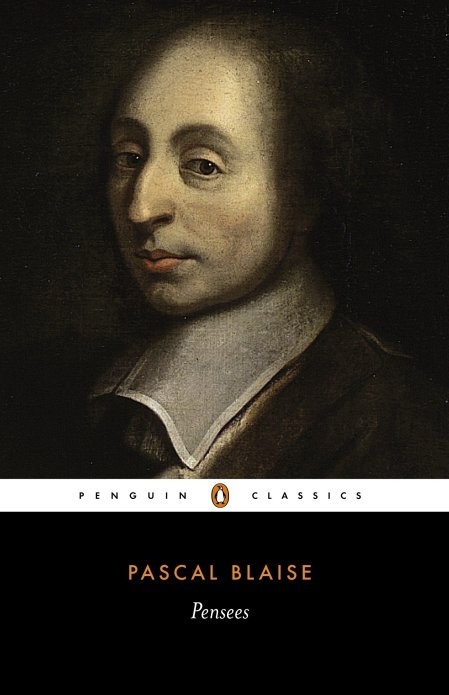
Blaise Pascal, the precociously brilliant contemporary of Descartes, was a gifted mathematician and physicist, but it is his unfinished apologia for the Christian religion upon which his reputation now rests. The Penseés is a collection of philosohical fragments, notes and essays in which Pascal explores the contradictions of human nature in pscyhological, social, metaphysical and - above all - theological terms. Mankind emerges from Pascal's analysis as a wretched and desolate creature within an impersonal universe, but who can be transformed through faith in God's grace.
Blaise Pascal was born in Clermont in 1623, the son of a government official. During his short life he left his mark on mathematics, physics, religious controversy and literature. A convert to Jansenism, he engaged with gusto in a controversy with the Jesuits, which gave rise to his Lettres Provinciales on which, with the Pensées, his literary fame chiefly rests. A remarkable stylist, he is regarded by many as the greatest of French prose artists. He died, after a long illness, in 1662.
Related titles
Our top books, exclusive content and competitions. Straight to your inbox.
Thank you! Please check your inbox and confirm your email address to finish signing up.