- Published: 15 September 2026
- ISBN: 9780807003930
- Imprint: Beacon Press
- Format: Hardback
- Pages: 224
- RRP: $75.00
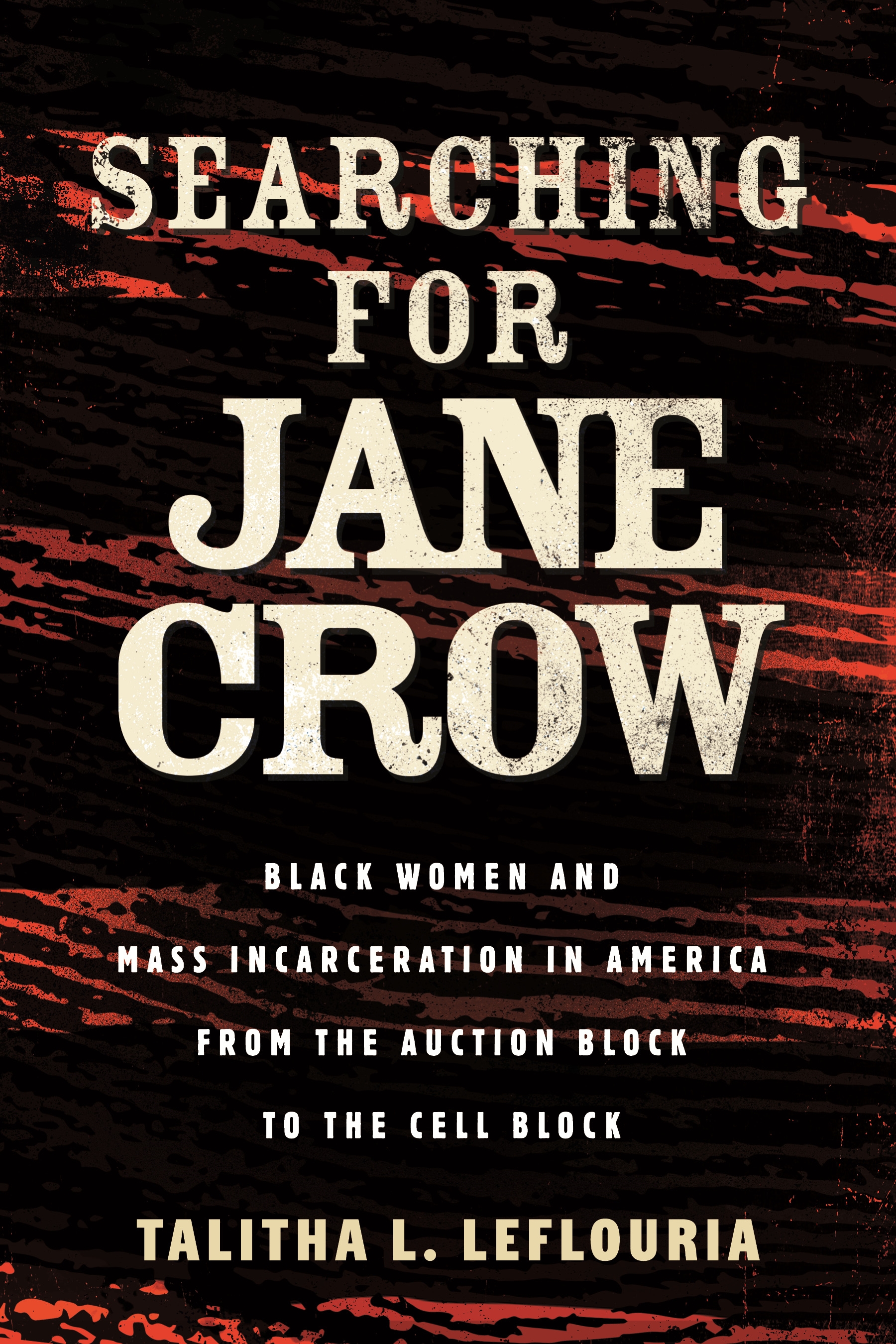
Searching for Jane Crow
Black Women and Mass Incarceration in America from the Auction Block to the Cell Block


- Published: 15 September 2026
- ISBN: 9780807003930
- Imprint: Beacon Press
- Format: Hardback
- Pages: 224
- RRP: $75.00
Talitha LeFlouria has written a brilliant and original book. She has dared to courageously uncover the past and tell the truth about this nation's cruel history of incarcerating Black women, revealing that mass incarceration did not begin with the War on Drugs but with slavery. Searching for Jane Crow makes us grapple with the fact that little has changed through the centuries. This book is must-read."', Susan Burton, winner of the NAACP Image Award for Becoming Ms. Burton: From Prison to Recovery to Leading the Fight for Incarcerated Women
'By searching for Jane Crow, Talitha LeFlouria finds the deep roots of an American ‘prison nation,’ one that still daily condemns Black women to fates that should shock the conscience. Like the early abolitionists who confronted the public with stories about American slavery as it was, LeFlouria urges us to look, without flinching, at incarcerations then and now, side by side. The reader who does so will be changed.', W. Caleb McDaniel, Pulitzer Prize–winning author of Sweet Taste of Liberty: A True Story of Slavery and Restitution in America
'Searching for Jane Crow is an eloquent, long-overdue corrective to the many histories of mass incarceration in America that relegate Black women to the margins. If you yearn to understand how our penal system became what it is today and where Black women fit in that story, this is the book for you.', Stephanie E. Jones-Rogers, author of They Were Her Property: White Women as Slave Owners in the American South
'Talitha L. LeFlouria delivers a paradigm-shifting account of American incarceration, tracing its roots to the domestic slave trade and the long history of racialized confinement that has shaped Black women’s lives for centuries. With extraordinary archival rigor and narrative power, she reveals mass incarceration not as a modern aberration but as a central throughline of our nation’s history. This book ought to change forever how the history of mass incarceration is told.', Michelle Alexander, author of The New Jim Crow: Mass Incarceration in the Age of Colorblindness
'“Deeply researched and profoundly moving, Searching for Jane Crow is a trailblazing work that lays bare the long, painful history of the criminalization and incarceration of Black women and girls, tracing a system rooted in slavery that continues to shape American life today.”', Dr. Sydney McKinney, executive director of the National Black Women's Justice Institute
'“With a passionate pen and a thorough mining of the archive, LeFlouria reshapes the terrain of carceral studies. Moving the timeline of this scholarship back to the early nineteenth century, LeFlouria convincingly demonstrates that mass incarceration was not a twentieth-century construction and that Black women stood at its ground zero. Accessible and written for the largest of audiences, Searching for Jane Crow locates the domestic slave trade as the origin story of mass incarceration, reminding its readers that both institutions are forever connected. A powerful and purposeful must-read.”', Erica Armstrong Dunbar, author of Never Caught: The Washingtons' Relentless Pursuit of their Runaway Slave, Ona Judge
'"Searching for Jane Crow is a powerful, truth-telling account that centers Black women too often erased from conversations on incarceration. Talitha L. LeFlouria exposes the legacy of punishment and profit, calling us to build systems rooted in dignity, equity, and freedom for all."', David Ayala, executive director of the Formerly Incarcerated, Convicted People & Families Movement
'Historian LeFlouria (Chained in Silence) shows in this eye-opening account that Black women’s oft-overlooked experiences reveal deep connective currents across eras of Black “carceral” subjugation. While it’s commonplace to consider mass incarceration as having its roots in the 1970s war on drugs, LeFlouria argues that “systems of incarceration and slavery have worked together” to “keep Black women bound” for centuries. LeFlouria surfaces startling examples that emphasize the extent to which “the plantation and the... jail” worked hand-in-glove, such as an account from an enslaved woman who recollected that, each time she was auctioned, she had to spend time incarcerated in terrible conditions in a local jail; as well as accounts of free Black women who ended up jailed, and subsequently sold into slavery as punishment, after having broken draconian laws against things like “traveling without... papers” or “socializing with an enslaved person.” LeFleuria goes on to spotlight how Black women, like Black men, were jailed during the Jim Crow era and beyond so that corporations could extract their prison labor, while noting the uniquely disastrous impact such incarceration can have for Black women and families, as women prisoners can end up trafficked for sex and a mother’s incarceration often leads to her children being sent to foster care. It’s a damning look at the racialized nature of the U.S. prison system. (Aug.)', Publishers Weekly
'Searching for Jane Crow: Black Women and Mass Incarceration in America from the Auction
Block to the Cell Block.
By Talitha L. LeFlouria
Aug. 2026. 224p. Beacon, $32 (9780807003930); e-book (9780807003947). 305.8
In an incisive and radical argument, historian LeFlouria (Chained in Silence, 2015) makes a case
that troubling parallels exist between the plight of Black women prior to and following the Civil
War and their contemporaries caught in today's criminal justice system. Making use of multiple
wrenching examples from past and present, LeFlouria points to connections between enslaved
women losing their children and women in prison, or newly out of it, losing their children to "the
child 'welfare' system." She suggests that prisons profit from work performed by inmates in the
same way slave owners profited from the work of enslaved people, and that the fines and fees
imposed on individuals on parole and probation are functionally equivalent to the “debt slavery”
suffered by many after the Civil War. Her conclusions leave little room for nuanced
disagreement. “When people ask me about reforming the system, it feels akin to asking me how
to make slavery better,” she writes. Whether or not they agree that reform is impossible, readers
will find much material for reflection.
— Margaret Quamme', Margaret Quamme, Booklist