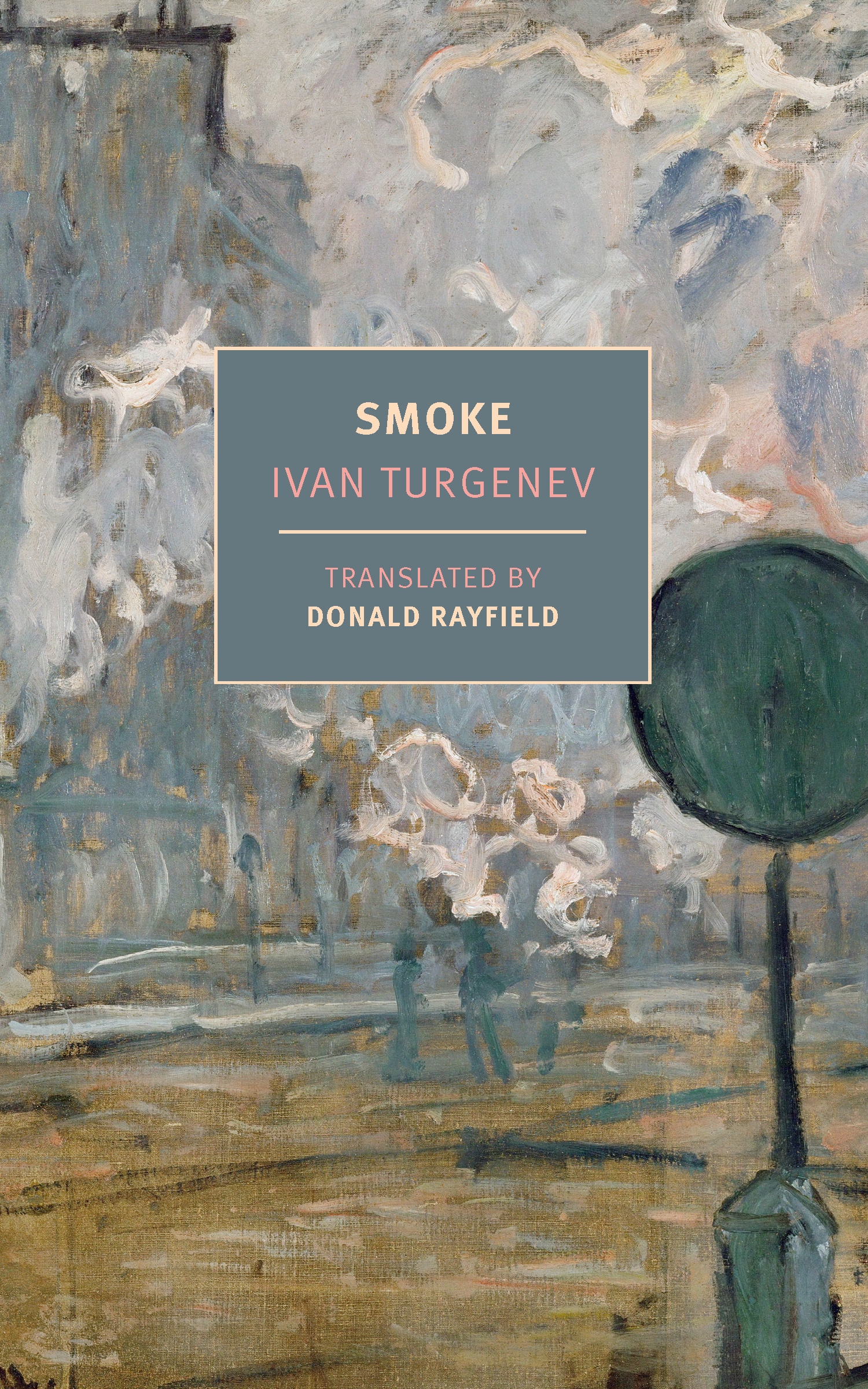
- Published: 28 July 2026
- ISBN: 9798896230441
- Imprint: NY Review Books
- Format: Paperback
- Pages: 200
- RRP: $45.00
Smoke


- Published: 28 July 2026
- ISBN: 9798896230441
- Imprint: NY Review Books
- Format: Paperback
- Pages: 200
- RRP: $45.00
“Turgenev was not given to nationalistic romanticism or to giving speeches. He represented what to the modern state remains troublesome: a man who desires neither to lead nor to be followed.” — Hisham Matar, The Guardian
“[Ivan Turgenev] was driven by a passionate curiosity about his fellow men, and a gratitude for their endless complexity that ran far deeper than mere judgment. Reading Turgenev provokes the question: Can we learn from him? Can we, too, remove ourselves just enough from our intractable conflicts to find them fascinating, to find them amazing—even to love them?” — Sam Sacks, on Turgenev’s Fathers and Children, The Wall Street Journal
“[Ivan Turgenev] faithfully described them all—the talkers, the idealists, the fighters, the cowards, the reactionaries, and the radicals, sometimes, as in Smoke, with biting polemical irony, but, as a rule, so scrupulously, with so much understanding for all the overlapping sides of every question, so much unruffled patience, touched only occasionally with undisguised irony or satire (without sparing his own character and views), that he angered almost everyone at some time.” — Isaiah Berlin, The New York Review of Books
“There is nothing in literature more stinging than the satire of the first six chapters of Smoke, which has a quality of Dickens about it. This is not hatred, however. While laughing bitterly at his young 'intellectual' countrymen, Turgenev understands them; they, like himself, are creatures of environment and heredity.” — John Reed, from the introduction to the 1919 edition of Smoke