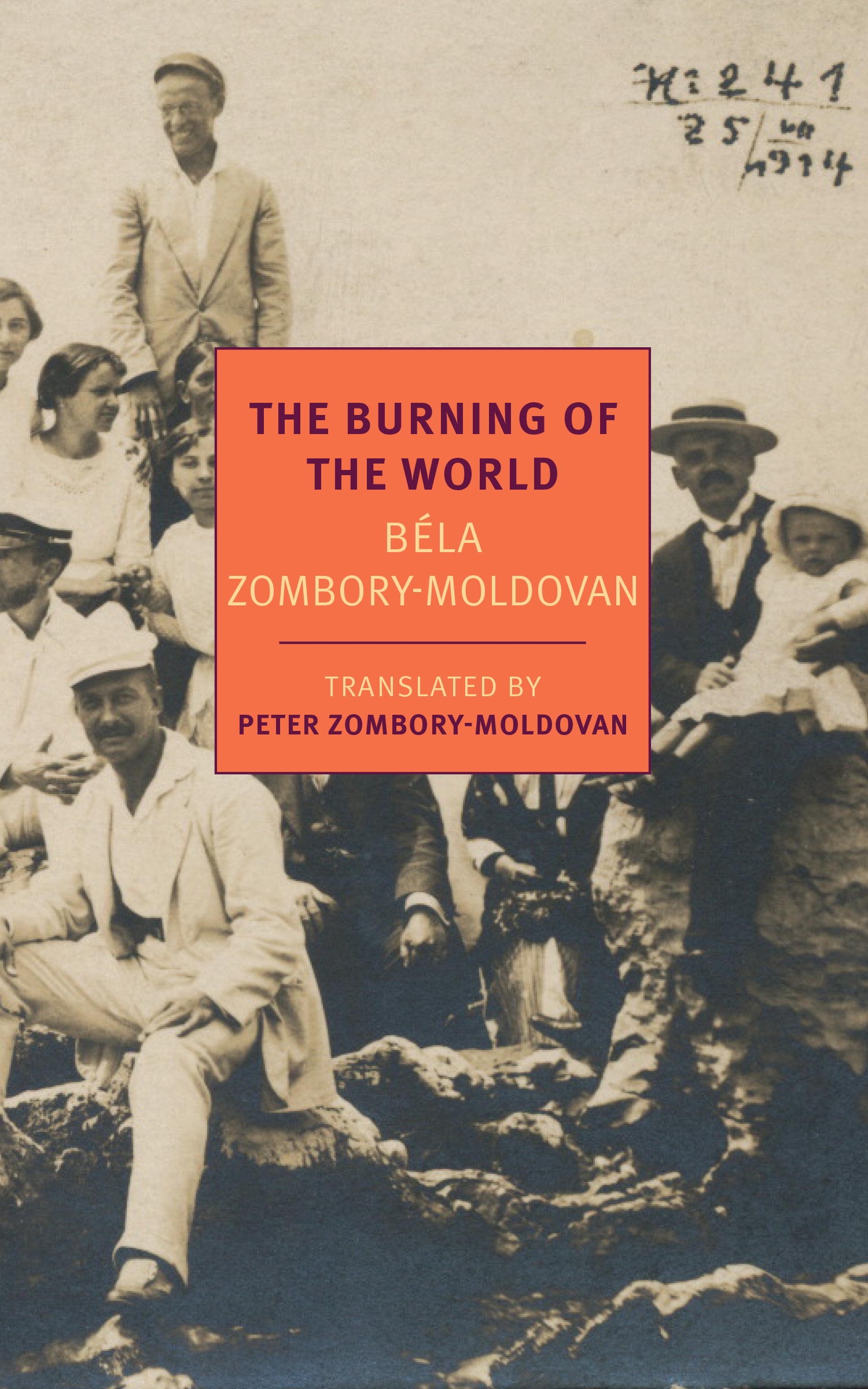
- Published: 15 August 2014
- ISBN: 9781590178096
- Imprint: NY Review Books
- Format: Paperback
- Pages: 184
- RRP: $45.00
The Burning of the World
A Memoir of 1914


- Published: 15 August 2014
- ISBN: 9781590178096
- Imprint: NY Review Books
- Format: Paperback
- Pages: 184
- RRP: $45.00
"To be in a war, within it, to know what that means, to understand the appalling and dreadful significance of all that is appaling and dreadful--such was the fate of this gentle Hungarian painter, who, with several million companions, became entangled in the First World War and was never able to free himself from its memories. He tried to do so, nonetheless; he tried to free himself from these memories--this volume is the proof of that. This is perilous reading: the reader is invited, along with the writer, the one who remembers, to take part in what happened. But this is what we must do: from sympathy, from compassion, so that the one who truly lived through all of this will not be so utterly, unbearably alone." --Laszlo Krasznahorkai
"One reads with never-ending curiosity and ever deeper emotions the recollections of a compassionate artist of the first year of World War I on the nearly forgotten Eastern front. Unlike in the West, here there were few trenches; instead, there was constant movement within which vast armies of ill-equipped and ill-trained Russians, Cossacks, Caucasians, Asians, Austro-Germans, Reich Germans, Hungarians, Romanians, Poles, Czechs, Slovaks, Croats, Serbs, Slovenes, and innumerable other nationalities massacred each other for causes that many, if not most participants were unable to understand." --Istvan Deak, Columbia University
"To be in a war, within it, to know what that means, to understand the appalling and dreadful significance of all that is appaling and dreadful--such was the fate of this gentle Hungarian painter, who, with several million companions, became entangled in the First World War and was never able to free himself from its memories. He tried to do so, nonetheless; he tried to free himself from these memories--this volume is the proof of that. This is perilous reading: the reader is invited, along with the writer, the one who remembers, to take part in what happened. But this is what we must do: from sympathy, from compassion, so that the one who truly lived through all of this will not be so utterly, unbearably alone." --Laszlo Krasznahorkai
"One reads with never-ending curiosity and ever deeper emotions the recollections of a compassionate artist of the first year of World War I on the nearly forgotten Eastern front. Unlike in the West, here there were few trenches; instead, there was constant movement within which vast armies of ill-equipped and ill-trained Russians, Cossacks, Caucasians, Asians, Austro-Germans, Reich Germans, Hungarians, Romanians, Poles, Czechs, Slovaks, Croats, Serbs, Slovenes, and innumerable other nationalities massacred each other for causes that many, if not most participants were unable to understand." --Istvan Deak, Columbia University