> Skip to content
[]
  • Published: 1 June 2010
  • ISBN: 9780099540748
  • Imprint: Vintage Classics
  • Format: Paperback
  • Pages: 96
  • RRP: $23.00
Categories:

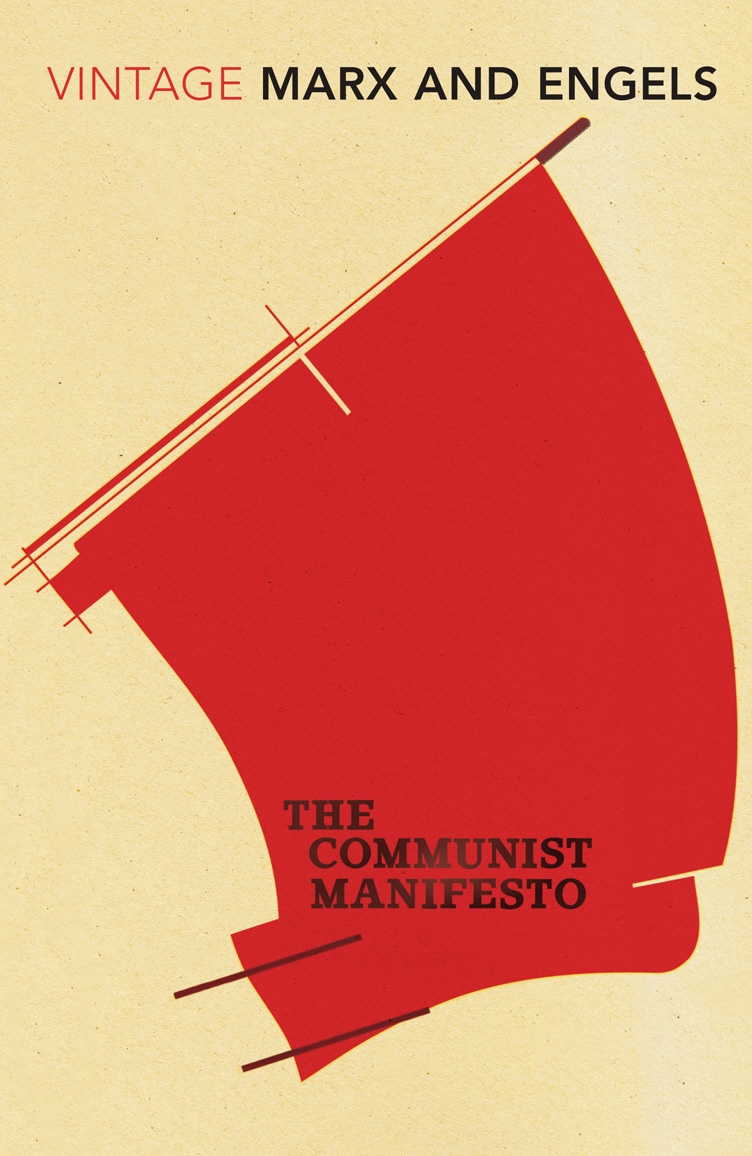
The Communist Manifesto


The second best-selling book ever published which heralded a seismic change in the world's political and social landscapes.

WITH AN INTRODUCTION BY DAVID AARONOVITCH

The Communist Manifesto was first published in London, by two young men in their late twenties, in 1848. Its impact reverberated across the globe and throughout the next century, and it has come to be recognised as one of the most important political texts ever written. Maintaining that the history of all societies is a history of class struggle, the manifesto proclaims that communism is the only route to equality, and is a call to action aimed at the proletariat. It is an essential read for anyone seeking to understand our modern political landscape.

  • Published: 1 June 2010
  • ISBN: 9780099540748
  • Imprint: Vintage Classics
  • Format: Paperback
  • Pages: 96
  • RRP: $23.00
Categories:

About the authors

Karl Marx

Karl Marx (1818–1883) was a philosopher, social scientist, historian, and revolutionary. He is without a doubt the most influential socialist thinker to emerge in the nineteenth century. Although he was largely ignored by scholars in his own lifetime, his social, economic, and political ideas gained rapid acceptance in the socialist movement after his death. In Paris, Marx developed his lifelong partnership with Friedrich Engels (1820–1895).

Friedrich Engels

Born in Westphalia in 1820, Friedrich Engels was the son of a textile manufacturer. After military training in Berlin and already a convert to communism, Engels went to Manchester in 1842 to represent the family firm. A relationship with a mill-hand, Mary Bums, and friendship with local Owenites and Chartists helped to inspire his famous early work, The Condition of the Working Class in England in 1844. Collaboration with Marx began in 1844 and in 1847 he composed the first drafts of the Manifesto. After playing an active part in the German revolutions, Engels returned to work in Manchester until 1870, when he moved to London. He not only helped Marx financially, but reinforced their shared position through his own expositions of the new theory. After Marx’s death, he prepared the unfinished volumes of Capital for publication. He died in London in 1895.

Praise for The Communist Manifesto

A brilliant piece of writing, easily accessible, and which really did change the world

Daily Mail

Contemporary, ironic, cool, biting writing style

Observer

A short work, written in punchy, accessible style. It can be read in an hour.

Sunday Mirror

Irreverent, mocking, sarcastic, witty, savage, provocative and with a driving, irresistible argument

Independent

As a force for change, its influence has been surpassed only by the Bible. As a piece of writing, it is a masterpiece

Guardian