> Skip to content
[]
  • Published: 3 May 2011
  • ISBN: 9781101528594
  • Imprint: PEN US eBook Adult
  • Format: EBook
  • Pages: 128

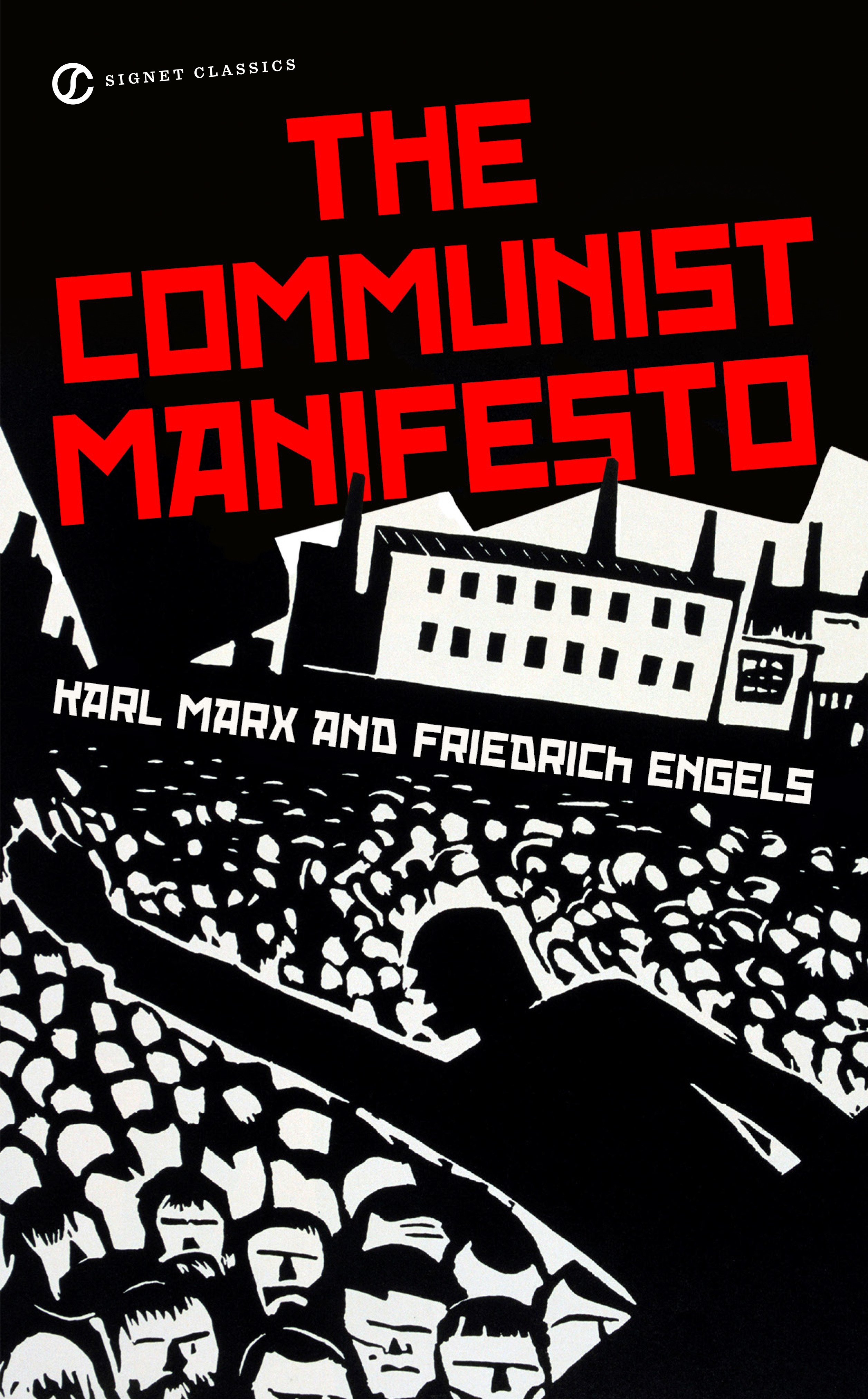
The Communist Manifesto


Featuring an extensive, provocative introduction by historian Martin Malia, this authorized English translation of The Communist Manifesto, edited and annotated by Engels, with prefaces to editions published between 1872 and 1888, provides a new opportunity to examine the document that shook the world.

In 1848, two young men published what would become one of the defining documents of modern history, The Communist Manifesto. It rapidly realigned political faultlines all over the world and its aftershock resonates to this day. In the many years since its publication, no other social program has inspired such divisive and violent debate. Ever since the collapse of the Soviet Union, the world’s first regime to adopt the Manifesto’s tenets, historians have debated its intent and its impact. In the current era of market democracy in Russia and Eastern Europe, nationalism on every continent, and an ever tightening global economy, does the specter of Communism still haunt the world? Were the seeds of Communism’s ultimate destruction already planted in 1848? Is there anything to be learned from Marx’s envisioned utopia?
 
With an Introduction by Martin Malia
and an Afterword by Stephen Kotkin 
  • Published: 3 May 2011
  • ISBN: 9781101528594
  • Imprint: PEN US eBook Adult
  • Format: EBook
  • Pages: 128

About the authors

Karl Marx

Karl Marx (1818–1883) was a philosopher, social scientist, historian, and revolutionary. He is without a doubt the most influential socialist thinker to emerge in the nineteenth century. Although he was largely ignored by scholars in his own lifetime, his social, economic, and political ideas gained rapid acceptance in the socialist movement after his death. In Paris, Marx developed his lifelong partnership with Friedrich Engels (1820–1895).

Friedrich Engels

Born in Westphalia in 1820, Friedrich Engels was the son of a textile manufacturer. After military training in Berlin and already a convert to communism, Engels went to Manchester in 1842 to represent the family firm. A relationship with a mill-hand, Mary Bums, and friendship with local Owenites and Chartists helped to inspire his famous early work, The Condition of the Working Class in England in 1844. Collaboration with Marx began in 1844 and in 1847 he composed the first drafts of the Manifesto. After playing an active part in the German revolutions, Engels returned to work in Manchester until 1870, when he moved to London. He not only helped Marx financially, but reinforced their shared position through his own expositions of the new theory. After Marx’s death, he prepared the unfinished volumes of Capital for publication. He died in London in 1895.