- Published: 17 November 2026
- ISBN: 9780593687024
- Imprint: Knopf US
- Format: Paperback
- Pages: 240
- RRP: $50.00
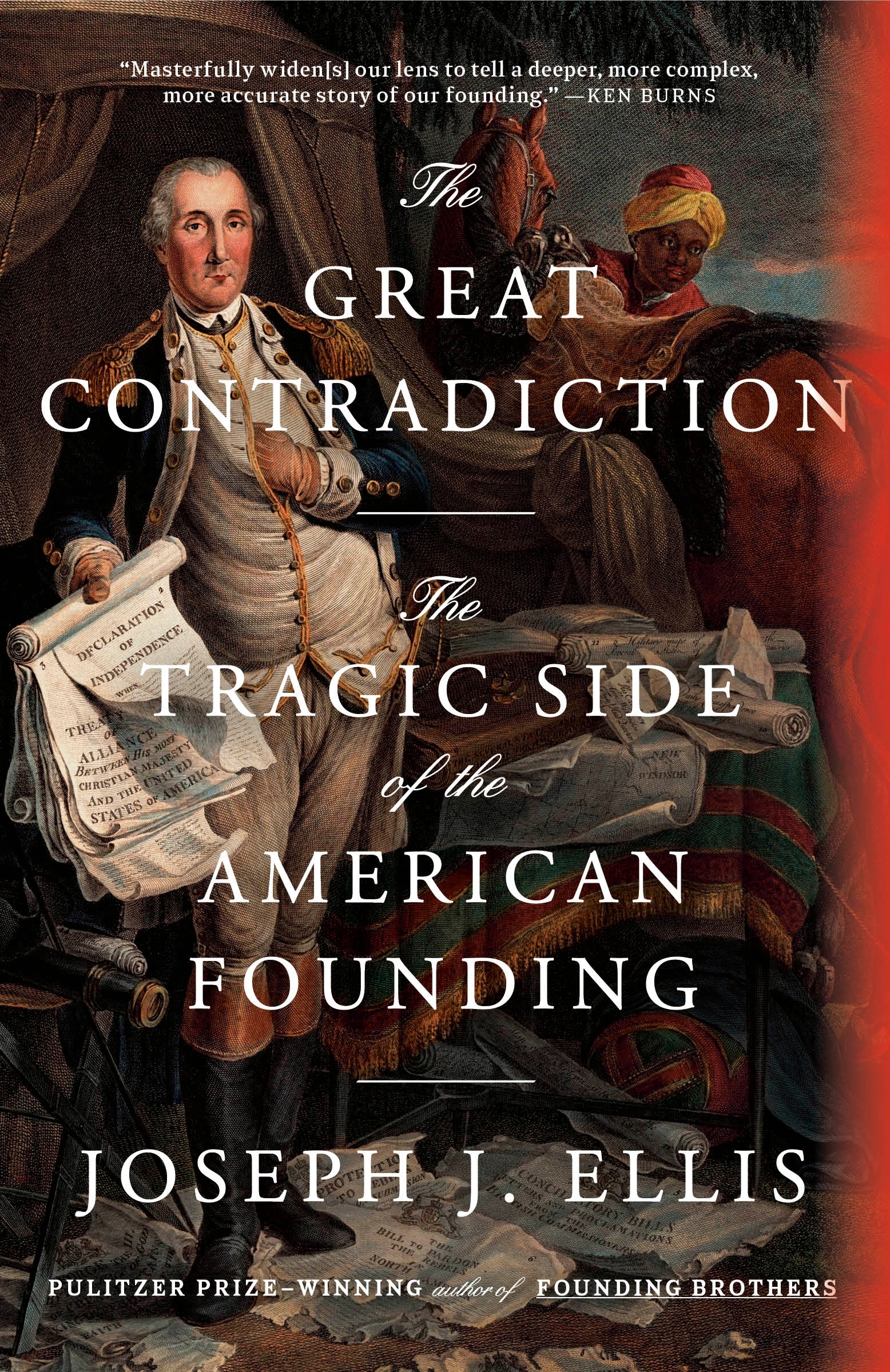
The Great Contradiction
The Tragic Side of the American Founding


- Published: 17 November 2026
- ISBN: 9780593687024
- Imprint: Knopf US
- Format: Paperback
- Pages: 240
- RRP: $50.00
About the author

“How did the founders manage to lose all sight of their revolutionary ideals when it came to African and Native Americans? ‘Prejudice, avarice, and pusillanimity’ was the assessment of one 1782 idealist, a formula Joseph J. Ellis unpacks here with his trademark clarity. Cutting through mist and myth, Ellis probes—on eighteenth-century rather than twenty-first-century terms—the questions that reduced thinkers like James Madison and Thomas Jefferson to blithering incoherence. An elegant, concise volume that illuminates the obfuscations, misunderstandings, and hypocrisy that continue to sabotage us today.” —Stacy Schiff, author of The Revolutionary: Samuel Adams
“As we approach the 250th anniversary of the Declaration of Independence, Joseph J. Ellis has given us a necessary corrective to any would-be triumphant narratives of America’s founding. Fluidly written and cogently argued, The Great Contradiction puts the failures to abolish slavery and to avoid Indian removal at the heart of the country’s creation story—failures that have shaped us to this day.” —Annette Gordon-Reed, author of On Juneteenth
“The American Revolution is often encrusted with the barnacles of sentimentality and nostalgia; we see only what we want to see. Joseph Ellis has masterfully widened our lens to tell a deeper, more complex, more accurate story of our founding. The great figures and ideals are still there, but now they are accompanied by the stories of those left out of the prize of liberty and freedom.” —Ken Burns, award-winning filmmaker
"Deals honestly with America’s original sins without slandering the country or diminishing its other glories. . . . History remains much too complex to divide into narrative or political sides. It is, however, possible to divide the subject into partisans of good and bad writing. So if you are going to take a side, join Mr. Ellis’s.” —Nicholas Clairmont, The Wall Street Journal