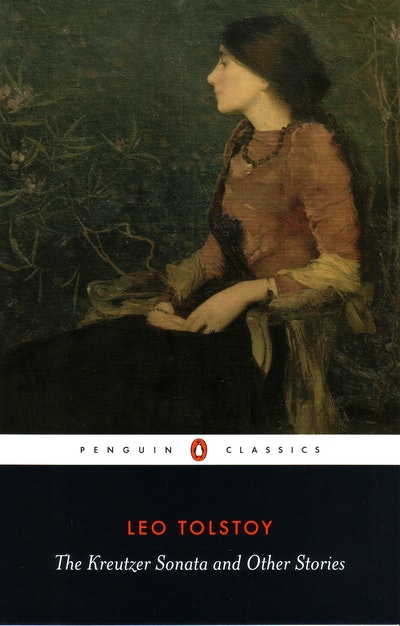
When Marshal of the Nobility Pozdnyshev suspects his wife of having an affair with her music partner, his jealousy consumes him and drives him to murder. Controversial upon publication in 1890, The Kreutzer Sonata illuminates Tolstoy’s then-feverish Christian ideals, his conflicts with lust and the hypocrisies of nineteenth-century marriage, and his thinking on the role of art and music in society.
In her Introduction, Doris Lessing shows how relevant The Kreutzer Sonata is to our understanding of Tolstoy the artist, as well as to feminism and literature. This Modern Library Paperback Classic also contains Tolstoy’s Sequel to the Kruetzer Sonata.
Leo Tolstoy was born in 1828 in the Tula province. He studied at the University of Kazan, then led a life of pleasure until 1851 when he joined an artillery regiment in the Caucasus. He established his reputation as a writer with The Sebastopol Sketches (1855-6). After a period in St Petersburg and abroad, he married, had thirteen children, managed his vast estates in the Volga Steppes and wrote War and Peace (1869) and Anna Karenina (1877). A Confession (1879-82) marked a spiritual crisis in his life, and in 1901 he was excommuincated by the Russian Holy Synod. He died in 1910, in the course of a dramatic flight from home, at the railway station of Astapovo.