- Published: 1 September 2026
- ISBN: 9780140288971
- Imprint: Penguin Press
- Format: Paperback
- Pages: 976
- RRP: $50.00
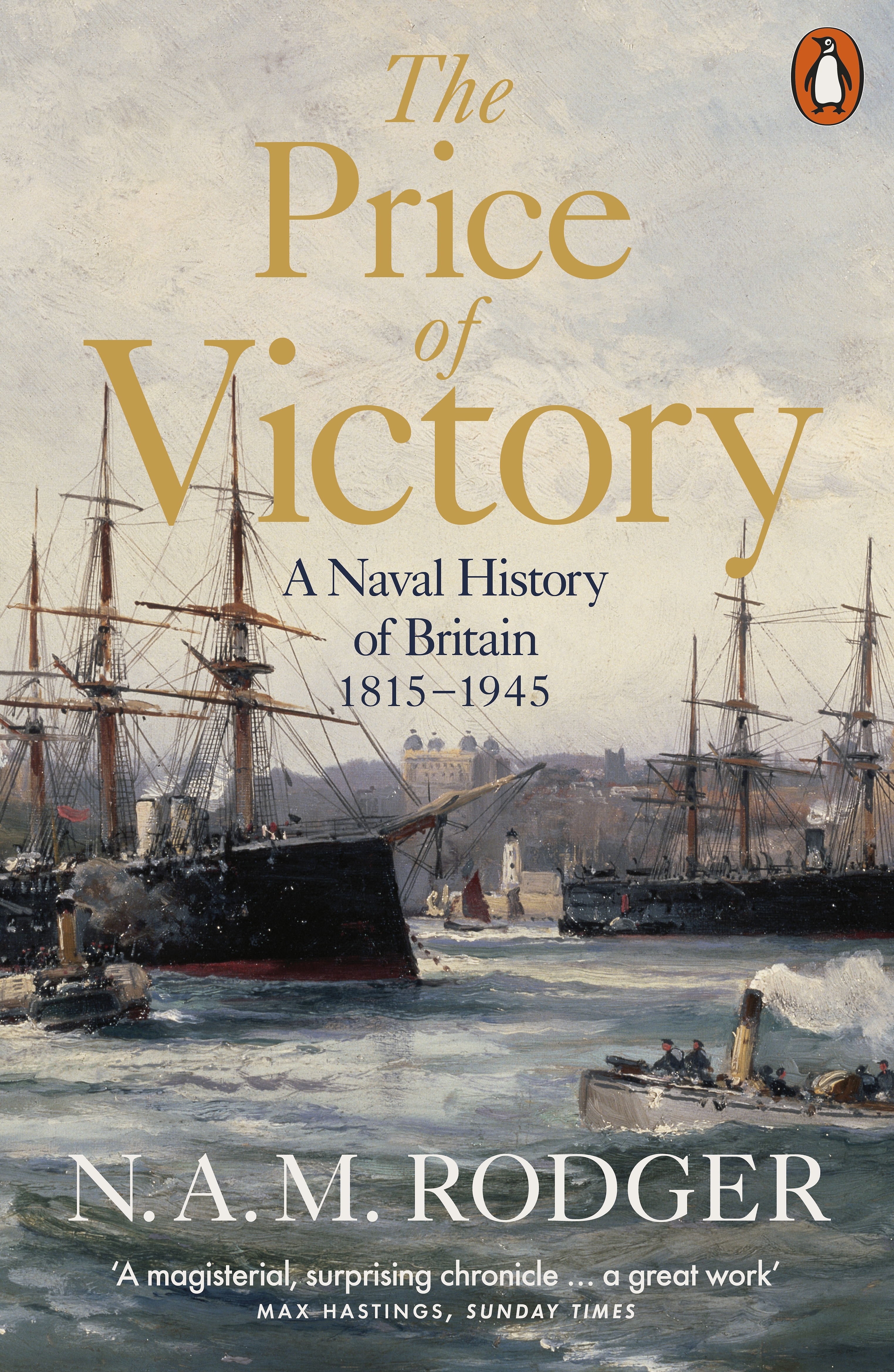
The Price of Victory
A Naval History of Britain: 1815 – 1945


- Published: 1 September 2026
- ISBN: 9780140288971
- Imprint: Penguin Press
- Format: Paperback
- Pages: 976
- RRP: $50.00
NAM Rodger knows more about the history of the Royal Navy, and thus in large measure about the history of Britain, than any other living person. [This] third and final volume of his history of the service since the 16th century confirms his absolute mastery of the great story
The Times, Best Non-Fiction Books of the 21st Century
Nicholas Rodger is our foremost naval historian … At last, with The Price of Victory, NAM Rodger’s great history of naval warfare is complete – and this final volume is a fascinating triumph
Simon Heffer, Telegraph
Within Rodger’s pages is everything you will ever need to know about the evolution of warships and their weapons across a century and a half. Throughout, the author is clear-sighted about the over-rigid exercise of command at sea ... Rodger writes with such authority [and] pays just tribute to the contribution of the women of the Women’s Royal Naval Service
Max Hastings, Sunday Times
Magisterial … a very considerable and scholarly work of synthesis which will provide a baseline for future work on Britain and its naval history for a generation or more
Jonathan Boff, Spectator
The Price of Victory: A naval history of Britain 1815–1945 is the third and final volume of a thirty-year enterprise telling the story of our country and her navy. This one covers the period when Britannia really did rule the waves globally, and masters logistics as well as strategy.
Andrew Roberts, Times Literary Supplement, Books of the Year
Erudite, engaging ... The Price of Victory covers the most densely studied period of naval history in Britain and beyond. This book, and the trilogy that it completes, are testimony to the dedication of a great scholar... As post-Brexit Britain ponders the obvious question of where next, this timely text emphasizes the critical place of the sea and the Navy in the making of the modern state. Rodger has completed a majestic trilogy, one that stretches back to the time when King Alfred first put to sea to stop Viking invaders, with an incisive, compelling assessment of an era that began with Britain at the peak of its relative power, shaping the defeat of Napoleon and a new European system, and ended with the defeat of fascist Italy, Nazi Germany and imperial Japan [and] continue[s] the argument into the present.
Andrew Lambert, Times Literary Supplement
This mighty book, the concluding volume of a trilogy chronicling the history of the Royal Navy, is the size of an aircraft carrier. Covering the years 1815-1945, Volume III weighs in at nearly 1,000 pages. Max Hastings is right to describe it as a "great work", full of "unfamiliar facts and magisterial judgments"
Robbie Millen, Saturday Times
Majestic ... This third volume, delayed by serious illness, brings us up to date and completes an achievement that is unlikely to be repeated, certainly not with such breadth, scholarship and wit. Rodger shows in gripping detail the ingenuity and assiduity that eventually made the navy into such a formidable fighting force, able to operate all over the world and embark on long and gruelling tours of duty
Ferdinand Mount, London Review of Books
We have waited 20 years for the final instalment of Rodger's trilogy on the naval history of Britain from the seventh century to the 20th ... it [is] just as thrilling as the two previous volumes
Yuan Yu Zhi, History Today, Books of the Year
The Price of Victory is the third and final volume of Rodger’s great history of British sea power. It covers a period of astonishing modernisation from just after Nelson to the end of the Second World War. Sail is replaced by steam; timber by steel; "rum, sodomy and the lash" and the press gang give way to a volunteer Navy, albeit one whose officers are lacking until training becomes more sophisticated. Rodger stresses the paradox that early 19th-century statesmen "were at pains to avoid" the idea of empire, yet the empire was what the Navy helped to build and secure. Submarines and the Fleet Air Arm arrived, and by the 1940s the Navy could act effectively with American allies in the Pacific – and to defend Britain in the Battle of the Atlantic.
Simon Heffer, Telegraph, Book of the Year