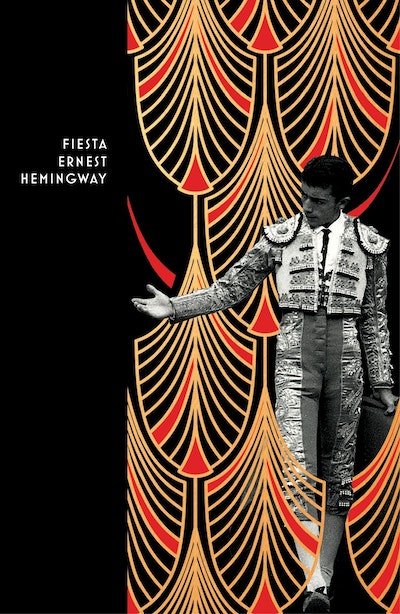
Ernest Hemingway's iconic first novel, published in 1926, tracks the Lost Generation of the 1920s from the nightclubs of Paris to the bullfighting arenas of Spain.
The debut novel from the Nobel Prize-winning author that is both a tragic love story and a searing group portrait of hapless American expatriates drinking, dancing, and chasing their dreams in postwar Europe.
“An absorbingly beautiful and tenderly absurd, heart-breaking narrative ... It is a truly gripping story.” —The New York Times
Ernest Hemingway, winner of the Nobel Prize in Literature in 1954, exerted a lasting influence on fiction in English through his economical prose style that conceals more than it reveals. His first novel, published in 1926, is narrated by world-weary journalist Jake Barnes, who is burdened by a wound acquired in World War I and by his utterly hopeless love for the flamboyantly decadent Lady Brett Ashley. The Sun Also Rises tracks the Lost Generation of the 1920s from the nightclubs of Paris to the bullfighting arenas of Spain.
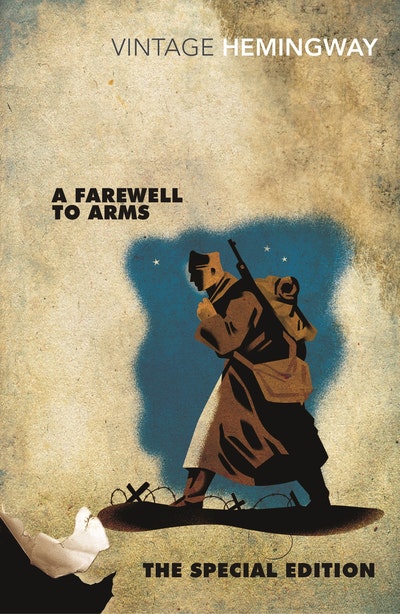
ERNEST HEMINGWAY was raised in Oak Park, Illinois, the child of a physician and a musician. After high school, he became a journalist with The Kansas City Star, before enlisting to be an ambulance driver in World War I. He returned home after a serious injury in 1918, but his military experience informed his fiction, especially A Farewell to Arms. He worked as a war correspondent for The Toronto Star during his first marriage, and over the next three marriages he would live in Paris, London, Key West, and Cuba. He published seven novels, six short story collections, and two nonfiction titles. On safari in Africa in 1952 he survived two plane crashes, though his obituaries ran prematurely. He lived on to win the Nobel Prize in Literature in 1954. Two trunks of his early work from Paris reappeared in 1957, and inspired him to write his memoir A Moveable Feast. He eventually committed suicide in Idaho in 1961.