> Skip to content
[]
  • Published: 7 June 1999
  • ISBN: 9780140435320
  • Imprint: Penguin Classics
  • Format: Paperback
  • Pages: 464
  • RRP: $40.00

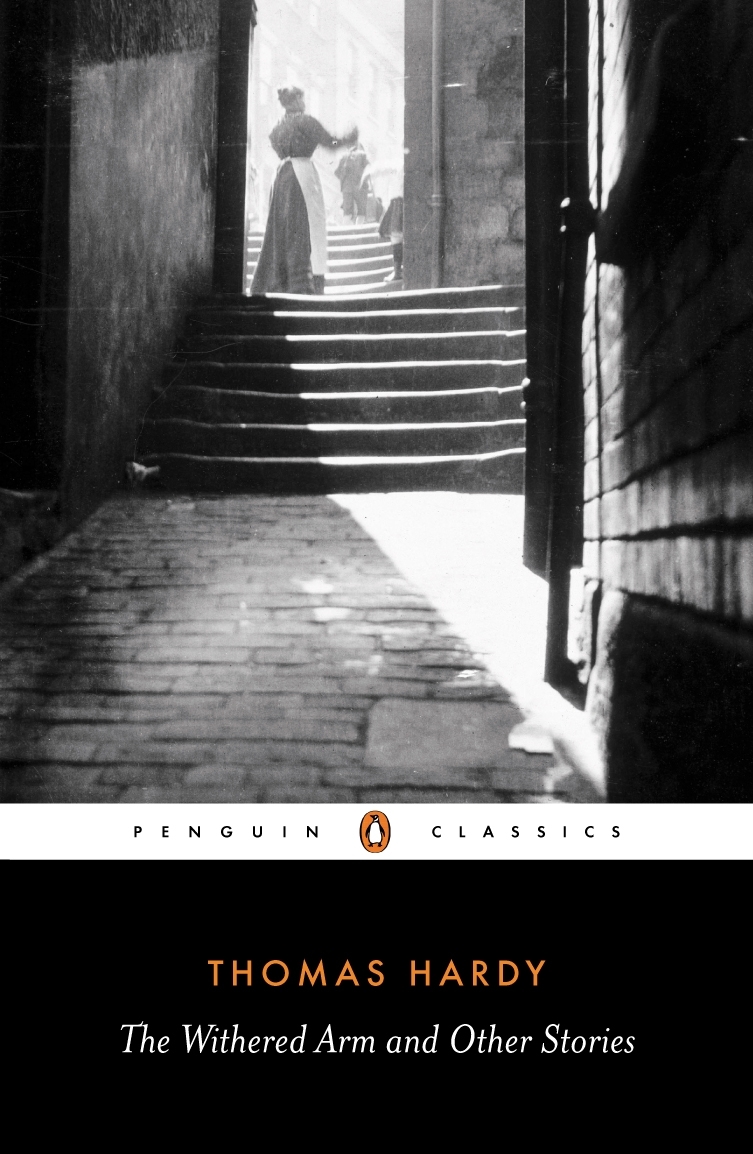
The Withered Arm and Other Stories 1874-1888


First of a two volume selection of Hardy's short stories

"See if she is dark or fair, and if you can, notice if her hands be white; if not, see if they look as though she had ever done housework, or are milker's hands like mine."

So Rhoda Brook, the abandoned mistress of Farmer Lodge, is jealous to discover details of his new bride in 'The Withered Arm', the title story in this selection of Hardy's finest short stories. Hardy's first story, 'Destiny and a Blue Cloak' was written fresh from the success of Far From the Madding Crowd. Beautiful in their own right, these stories are also testing-grounds for the novels in their controversial sexual politics, their refusal of romance structures, and their elegiac pursuit of past, lost loves.
Several of the stories in The Withered Arm were collected to form the famous volume, Wessex Tales (1888), the first time Hardy denoted 'Wessex' to describe his fictional world. The Withered Arm is the first of a new two-volume selection of Hardy's short stories, edited with an introduction and notes by Kristin Brady.
  • Published: 7 June 1999
  • ISBN: 9780140435320
  • Imprint: Penguin Classics
  • Format: Paperback
  • Pages: 464
  • RRP: $40.00

About the author

Thomas Hardy


Thomas Hardy was born in a cottage in Higher Bockhampton, near Dorchester, on 2 June 1840. He was educated locally and at sixteen was articled to a Dorchester architect, John Hicks. In 1862 he moved to London and found employment with another architect, Arthur Blomfield. He now began to write poetry and published an essay. By 1867 he had returned to Dorset to work as Hicks's assistant and began his first (unpublished) novel, The Poor Man and the Lady.

On an architectural visit to St Juliot in Cornwall in 1870 he met his first wife, Emma Gifford. Before their marriage in 1874 he had published four novels and was earning his living as a writer. More novels followed and in 1878 the Hardys moved from Dorset to the London literary scene. But in 1885, after building his house at Max Gate near Dorchester, Hardy again returned to Dorset. He then produced most of his major novels: The Mayor of Casterbridge (1886), The Woodlanders (1887), Tess of the D'Urbervilles (1891), The Pursuit of the Well-Beloved (1892) and Jude the Obscure (1895). Amidst the controversy caused by Jude the Obscure, he turned to the poetry he had been writing all his life. In the next thirty years he published over nine hundred poems and his epic drama in verse, The Dynasts.

After a long and bitter estrangement, Emma Hardy died at Max Gate in 1912. Paradoxically, the event triggered some of Hardy's finest love poetry. In 1914, however, he married Florence Dugdale, a close friend for several years. In 1910 he had been awarded the Order of Merit and was recognized, even revered, as the major literary figure of the time. He died on 11 January 1928. His ashes were buried in Westminster Abbey and his heart at Stinsford in Dorset.

Also by Thomas Hardy

See all