Osip Mandelstam is one of the greatest of twentieth-century poets and Voronezh Notebooks, a sequence of poems composed between 1935 and 1937 when he was living in internal exile in the Soviet city of Voronezh, is his last and most exploratory work. Meditating on death and survival, on power and poetry, on marriage, madness, friendship, and memory, challenging Stalin between lines that are full of the sights and sounds of the steppes, blue sky and black earth, the roads, winter breath, spring with its birds and flowers and bees, the notebooks are a continual improvisation and an unapologetic affirmation of poetry as life.
This English-only edition does not include the poems in their original language.
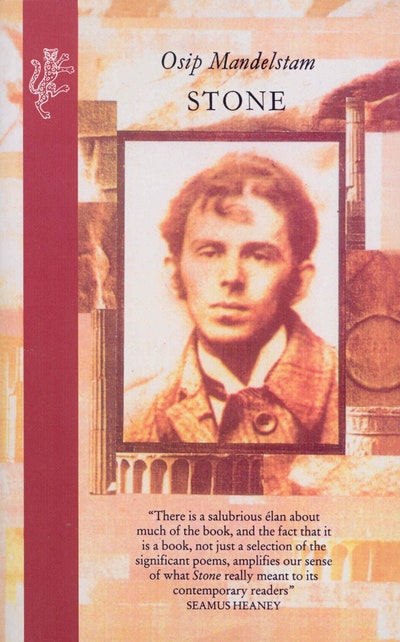
Osip Emilevich Mandelstam was born of Jewish parents in January 1891 in Warsaw, but grew up in St Petersburg, where he was educated at the prestigious Tenishev school. Following his schooling, he spent three years in Western Europe, living in Paris and visiting Switzerland, Italy and Germany. By 1911 Mandelstam had returned to St Petersburg, where he began to publish poems in Apollo and to attend the weekly literary salon in Vyacheslav Ivanov's Petersburg apartment, 'The Tower'. His friendship with Gumilyov, Anna Akhmatova's first husband, led him to take an active part in the 'Acmeist' movement, a reaction to the mysticism and vagueness of Symbolism which called for clarity, precision and 'thisworldness'. In the Spring of 1913 he published his first book Stone, which made an immediate impact. Mandelstam published only two other books of poems in his lifetime, Tristia (1925) and Poems (1928), and various prose works, including the semi-autobiographical sketch The Noise of Time (1925), the short novel The Egyptian Stamp (1928) and a collection of essays, On Poetry (1928). Between 1925 and 1930 he found himself increasingly at odds with the new regime and, unable to compose poetry, supported himself by writing children's books, translating and occasional journalism. Then, in 1934, quite deliberately Mandelstam read a satirical poem about Stalin to a small group of friends. Within days he was arrested and exiled first to Cherdyn and later to Voronezh, where he filled three school exercise books in a last creative burst of poetry. He returned to Moscow in 1937 and was rearrested in 1938, at the height of the purges. He died in a transit camp near Vladivostok in the winter of that year. The full story of his later life is told by Nadezhda Mandelstam in her two-volume memoir Hope Against Hope and Hope Abandoned; his non-fiction prose is published in English in a one-volume edition, The Collected Critical Prose and Letters.
Robert Tracy is Professor of English at the University of California, Berkely.