- Published: 23 September 2025
- ISBN: 9781802061871
- Imprint: Penguin eBooks
- Format: EBook
- Pages: 384
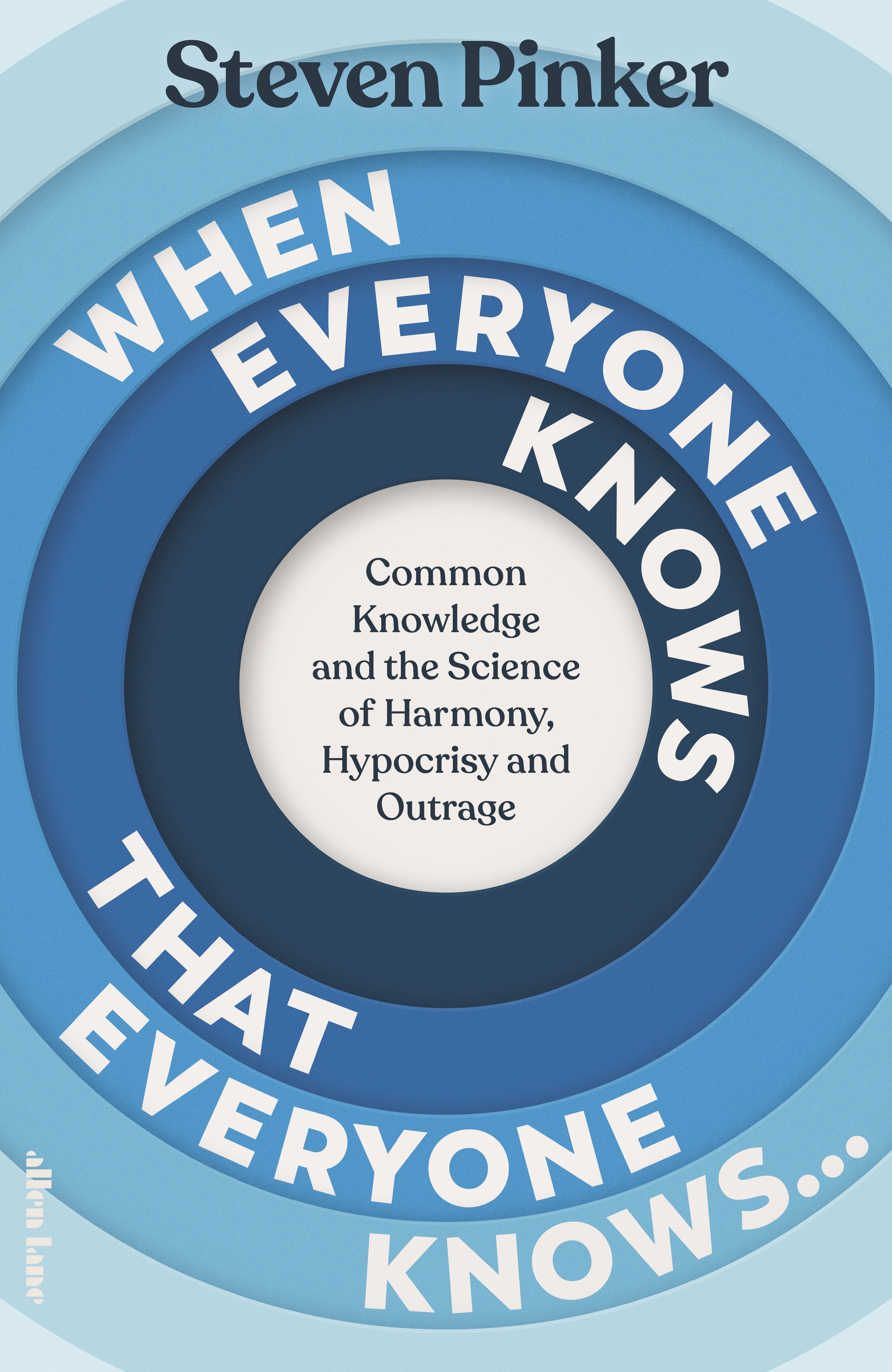
When Everyone Knows That Everyone Knows...
Common Knowledge and the Science of Harmony, Hypocrisy and Outrage


- Published: 23 September 2025
- ISBN: 9781802061871
- Imprint: Penguin eBooks
- Format: EBook
- Pages: 384



When Everyone Knows That Everyone Knows…is one of the most insightful books I’ve read about what makes us human and how we understand each other. It changed how I think about the interactions I have, and I bet it will do the same for you
Bill Gates
If Pinker's ideas become common knowledge, we'll be far better equipped to handle the massive disruptions already arriving in our hyper-networked world
Jonathan Haidt
Think you know what others think about what you are thinking? It turns out you’re probably wrong. And thanks to When Everyone Knows, now we know why. Once you read this book, you’ll never view human behavior quite the same way again
<b>Jonah Berger, <i>New York Times</i> bestselling author of <i>Contagious</i> and <i>The Catalyst</i> </b>
An expository masterpiece. Steven Pinker explains, with beautiful clarity, how common knowledge is critical to successful human interaction
Eric Maskin
A masterful look behind the curtain at the calculations that propel us forward. With his brilliant knack for exposing what we take for granted, celebrated cognitive psychologist Steven Pinker explores, among many phenomena, our very human tendency to reveal information strategically, only letting others see what we want them to see
<b>Annie Duke, bestselling author of <i>Thinking in Bets</i> and <i>How to Decide</i> </b>
A lively exposition of one of the most important and basic concepts in game theory, and the surprising ways it plays out in human affairs
<b>Robert Aumann, Nobel Laureate in Economics and Professor Emeritus at the Hebrew University of Jerusalem </b>
Insight packed. With brisk authority, Pinker shows that a key aspect of being human, sociality, depends on a mutual understanding of intentions, which allows us to make sense of responses like laughing and blushing and phenomena as various as myth-making and online cancel culture
<b>Daron Acemoglu, Nobel Laureate in Economics and <i> New York Times </i> bestselling author of <i> Why Nations Fail </i></b>
‘Foregrounds Steven Pinker’s many virtues as a populariser of science: his lucid style, his ability to marshal technical research for a general audience, and his more specialised, uncanny talent for discovering New Yorker cartoons that illustrate arcane results . . . Pinker ranges far and wide, showing how common knowledge plays a role in everything from laughter and tears, to euphemism and flirtation
John Maier, Sunday Times
A brilliant exploration of common knowledge as the glue that holds society together
Maria Konnikova, author of </i>The Biggest Bluff</i>
A characteristically lucid account [by the] superlatively gifted science writer
James Marriott, The Times
A fizzing, erudite book
Economist, Books of the Year
An accessible primer on game theory and the psychology of making decisions
Margaret Heller, Library Journal
An enjoyable . . . convincing case that [common knowledge] is actually fundamental to the way we live our lives
Steven Levitt
As lively an exposition of cognitive science as you are likely to find … it enlightens and provokes; to pick up Pinker’s own metaphor, it is worth dancing with
Rowan Williams, Guardian
Diverting and often informative
Dominic Green, The Wall Street Journal
Fascinating . . . Provides a logical explanation for all sorts of seemingly irrational human behaviour
Financial Times
His genius is to take a phenomenon with which we’re intimately acquainted, such as blushing or talking or crying, to invite us to ask why we do it then to hand us … a satisfying feeling of renewed understanding
Jessie Munton, Times Literary Supplement
Makes a compelling case that knowing what everyone else knows transforms societies . . . graceful and clear . . . fascinating
Michael Marshall, New Scientist
Pinker delivers his case much like a sprightly college lecture
Andrew Lynch, Irish Times
Tantalizing . . . A concept that seems to apply to everything we do with one another as humans
Alan Alda
The creation … and denial of common knowledge are far more complex than we think
Joshua Rothman, The New Yorker
The most important psychological concept you’ve never heard of
Yascha Mounk
There are a lot of brain-teasers … but it’s also fun
HBR IdeaCast
There is a galvanising infusion of jeopardy, morality and reality
Andrew Anthony, The Observer
Well organized and clearly explained
Dennis Duncan, The New York Times Book Review