> Skip to content

Article  •  19 July 2016


Death from above

The terrifying Kamikaze threat to our flagship, HMAS Australia.

During the latter part of World War II, a new Japanese terror occupied the skies: suicide attacks from the air that went by the name Kamikaze. The word loosely translates to ‘Divine Winds’, which is a reference to the 13th century typhoons that prevented a Mongolian invasion by sea. And beyond inflicting heavy casualties and sinking dozens of ships, the imminent threat of Kamikaze attack caused immeasurable psychological damage to allied sailors.

During the famous Battle of Leyte Gulf, which successfully delivered the US General Douglas MacArthur to the Philippines, the HMAS Australia was targeted in what was one of the first ever Kamikaze attacks. The impact was enormous – her captain and 29 other men killed, and 65 wounded – but the ship survived. During the remainder of the war, it’s thought that HMAS Australia was attacked by Kamikaze more times than any other allied ship. And in 1945, she was hit by no fewer than four Kamikaze planes on four successive days.

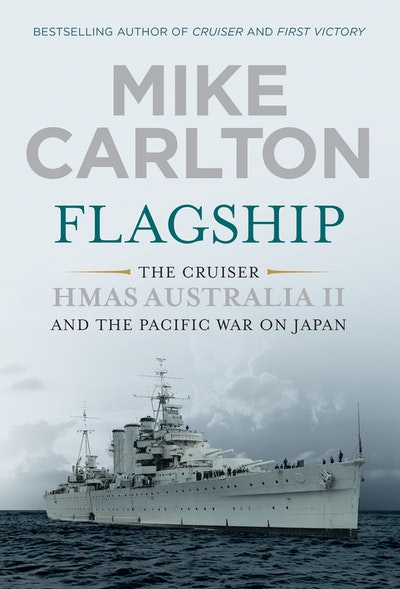
In Mike Carlton’s Flagship, he brings to life the heroic and tragic stories of HMAS Australia. In the chapter entitled ‘I have been given a splendid opportunity to die’, Carlton details the Kamikaze ritual and reveals a chilling letter home from a Japanese pilot during his final hours.


Over time, elaborate rituals were devised to sanctify the insanity, a gross perversion of the Samurai ethic. Before their last take-off, the young pilots would cleanse themselves with a steaming bath, drink a ceremonial cup of sake and compose a traditional Japanese death poem. They would help each other don the white hachimaki headband with its red rising sun, a symbol of courage, and the senninbari, a talisman belt of 1000 stitches, each sewn by a different woman. The Kamikaze mania spread to the army as well, and by the end of the war some 5000 young men had died for it. The burning spirit of Japanese youth had found a new, exalted way to honour the Emperor and defend the home islands, it was said. Petty Officer First Class Isao Matsuo of the IJN’s 701st Air Group wrote this letter home from the Philippines on 28 October 1944:

Dear Parents:

Please congratulate me. I have been given a splendid opportunity to die. This is my last day. The destiny of our homeland hinges on the decisive battle in the seas to the south where I shall fall like a blossom from a radiant cherry tree.

I shall be a shield for His Majesty and die cleanly along with my squadron leader and other friends. I wish that I could be born seven times, each time to smite the enemy.

How I appreciate this chance to die like a man! I am grateful from the depths of my heart to the parents who have reared me with their constant prayers and tender love. And I am grateful as well to my squadron leader and superior officers who have looked after me as if I were their own son and given me such careful training.

Thank you, my parents, for the 23 years during which you have cared for me and inspired me. I hope that my present deed will in some small way repay what you have done for me. Think well of me and know that your Isao died for our country. This is my last wish, and there is nothing else that I desire.

I shall return in spirit and look forward to your visit at the Yasukuni Shrine. Please take good care of yourselves.

How glorious is the Special Attack Corps’ Giretsu Unit whose Suisei bombers will attack the enemy. Our goal is to dive against the aircraft carriers of the enemy. Movie cameramen have been here to take our pictures. It is possible that you may see us in newsreels at the theatre. We are 16 warriors manning the bombers. May our death be as sudden and clean as the shattering of crystal. Written at Manila on the eve of our sortie.

Isao.

Soaring into the sky of the southern seas, it is our glorious mission to die as the shields of His Majesty. Cherry blossoms glisten as they open and fall.*


* Letter source: ‘The Last Wills the Special Attack Force Pilots Wrote’, Kamikaze (website), 5 December 2004, www.geocities.jp/kamikazes_site_e/isyo.html.

 

Feature Title

Flagship

The cruiser HMAS Australia II and the Pacific War on Japan

Read more

More features

See all
Article
The last of her kind

Mike Carlton introduces the incredible story of the Flagship HMAS Australia II.
Article
Books for reluctant readers post-Percy Jackson

They've closed the final Percy Jackson book. Now what?

Article
The best graphic novels for reluctant readers

Graphic novels are the perfect way to get disinterested readers to pick up a book.

Article
NZ Booklovers Awards Shortlist 2026

See the Penguin Random House NZ books shortlisted for the 2026 NZ Booklovers Awards

Article
The best Easter activities with Bluey!

Easter fun with Bluey! Whether you're a fan of quizzes, crafts, colouring, or biscuit decorating, we've rounded up the best Easter activities so you and your little ones can celebrate Easter with their favourite, Bluey!

Article
The best hockey romance books!

So, you’ve watched a particular hockey romance series that left you wanting more? You’ve come to the right place. After all, every great series is based on an even better book.

Article
You'll Always Be My Baby

The perfect bedtime picture book gift for parents and grandparents

Article
Editor's Rave Review: Stepping Up

Cath, our Penguin NZ Children's Publisher on what makes STEPPING UP by David Hill a very special book

Article
Are We There Yet?

Fun road trip games and books to keep little kids happy!

Article
Books to build empathy in kids

Children's books to encourage understanding, kindness and inclusion.

Article
How to go analog

Join the analogue movement! Check out four key tips for the best screen free hobbies, from colouring in to starting a book club.

Article
Elisabeth Easther presents her debut novel, Seed

Come and join as Elisabeth Easther launches Seed, her always hilarious and sometimes heartbreaking new novel

Looking for more articles?

See all articles