[]
Play sample
- Published: 29 September 2005
- ISBN: 9780141966793
- Imprint: Penguin eBooks
- Format: EBook
- Pages: 320
Categories:
The Canterbury Tales
Formats & editions
Buy from…
This edition is designed so that the First Fragment can be read as a unit
The most complete of all remaining surviving fragments sections of The Canterbury Tales, the First Fragment contains some of Chaucer's most widely enjoyed work. In The General Prologue, Chaucer introduces his pilgrims through a set of speaking portraits, drawn with a clarity that makes no attempt to conceal their peculiarities. The four tales that follow - those of the Knight, Miller, Reeve and Cook - reveal a wide variety of human preoccupations: whether chivalrous, romantic or simply sexual. Brilliantly bawdy and subtly complex, each of these tales is alive with Chaucer's skills as a poet, storyteller and creator of comedy.
- Published: 29 September 2005
- ISBN: 9780141966793
- Imprint: Penguin eBooks
- Format: EBook
- Pages: 320
Categories:
Other books in the series
The New Penguin Book Of American Short Stories, From Washington Irving To Lydia Davis
Edgar Allan Poe And Edith Wharton And Ernest Hemingway And Lydia Davis And Mark Twain And Washington Irving
A Dead Man's Memoir (A Theatrical Novel)
Mikhail Bulgakov
A Dog's Heart
Mikhail Bulgakov
The Man Who Was Thursday
G. K. Chesterton
On the Origin of Species
Charles Darwin
The Voyage of the Beagle
Charles Darwin
The Black Tulip
Alexandre Dumas
The Lady of the Camellias
Alexandre Dumas fils
Faust, Part I
Goethe
Faust, Part II
Goethe
Selected Poetry
Goethe Johann Wolfgang Von
Volpone and Other Plays
Ben Jonson
Species of Spaces and Other Pieces
Georges Perec
Venus in Furs
Leopold von Sacher-Masoch
Man and Superman
George Bernard Shaw
Botchan
Natsume Soseki
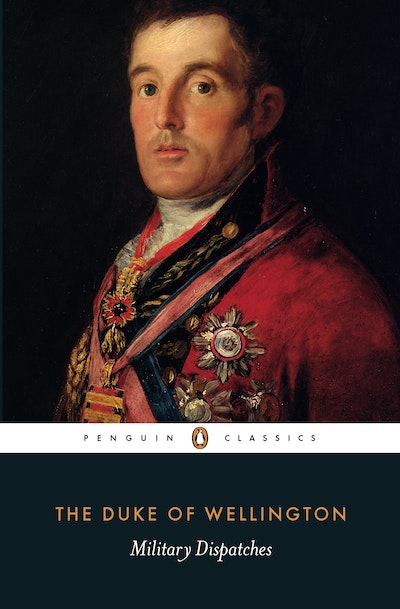
Military Dispatches
The Duke Of Wellington
The Prelude
William Wordsworth
About the author
Geoffrey Chaucer was born in London, the son of a wine-merchant, in about 1342, and as he spent his life in royal government service his career happens to be unusually well documented. By 1357 Chaucer was a page to the wife of Prince Lionel, second son of Edward III, and it was while in the prince's service that Chaucer was ransomed when captured during the English campaign in France in 1359-60. Chaucer's wife Philippa, whom he married c. 1365, was the sister of Katherine Swynford, the mistress (c. 1370) and third wife (1396) of John of Gaunt, Duke of Lancaster, whose first wife Blanche (d. 1368) is commemorated in Chaucer's earliest major poem, The Book of the Duchess.
From 1374 Chaucer worked as controller of customs on wool in the port of London, but between 1366 and 1378 he made a number of trips abroad on official business, including two trips to Italy in 1372-3 and 1378. The influence of Chaucer's encounter with Italian literature is felt in the poems he wrote in the late 1370's and early 1380s – The House of Fame, The Parliament of Fowls and a version of The Knight's Tale – and finds its fullest expression in Troilus and Criseyde.
In 1386 Chaucer was member of parliament for Kent, but in the same year he resigned his customs post, although in 1389 he was appointed Clerk of the King's Works (resigning in 1391). After finishing Troilus and his translation into English prose of Boethius' De consolatione philosophiae, Chaucer started his Legend of Good Women. In the 1390s he worked on his most ambitious project, The Canterbury Tales, which remained unfinished at his death. In 1399 Chaucer leased a house in the precincts of Westminster Abbey but died in 1400 and was buried in the Abbey.