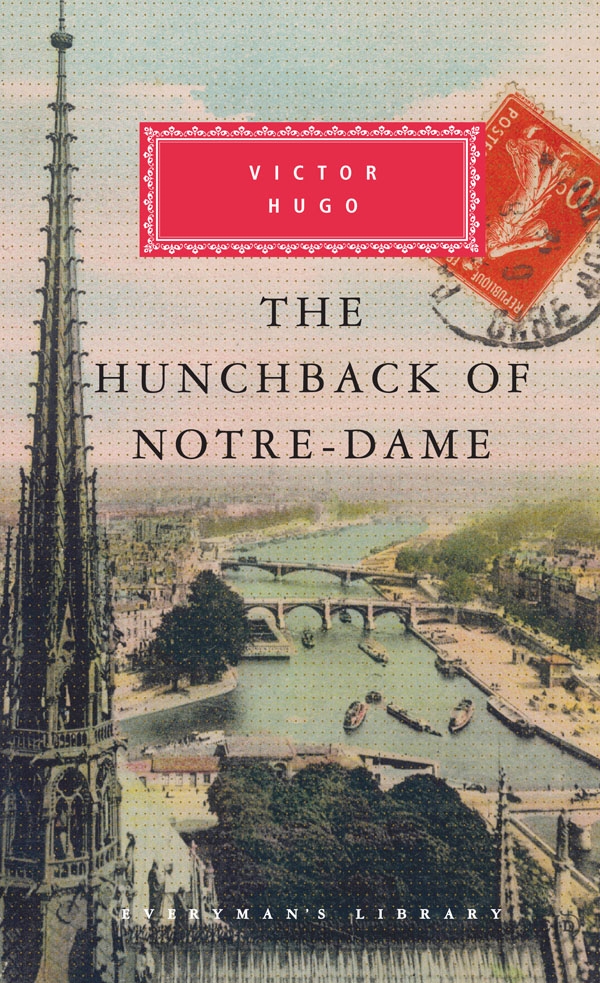
Hugo's grand medieval melodrama tells the story of the beautiful Esmeralda, a gypsy girl loved by three men: Archdeacon Frollo, his adoptive son Quasimodo, bell-ringer of Notre-Dame cathedral, and Captain Phoebus. Falsely accused of trying to murder Phoebus, who attempts to rape her, Esmeralda is sentenced to death and rescued from the gallows by Quasimodo who defends her to the last.
The subject of many adaptations for stage and screen, this remains perhaps one of the most romantic yet gripping stories ever told.
The Hunchback of Notre-Dame is an epic of a whole people, with a cast of characters that ranges from the king of France to the beggars who inhabit the Parisian sewers, and at their center the massive figure--a character in itself--of the great Cathedral of Notre-Dame. Quasimodo, the deformed bell-ringer of the cathedral; his foster father, the tormented archdeacon Frollo; and the beautiful and doomed Gypsy Esmeralda are caught up in a tragedy that still speaks clearly to us of revolution and social strife, of destiny and free will, and of love and loss.
The only widely available hardcover edition of Victor Hugo's masterful historical novel of medieval Paris--one of the most beloved of world classics.